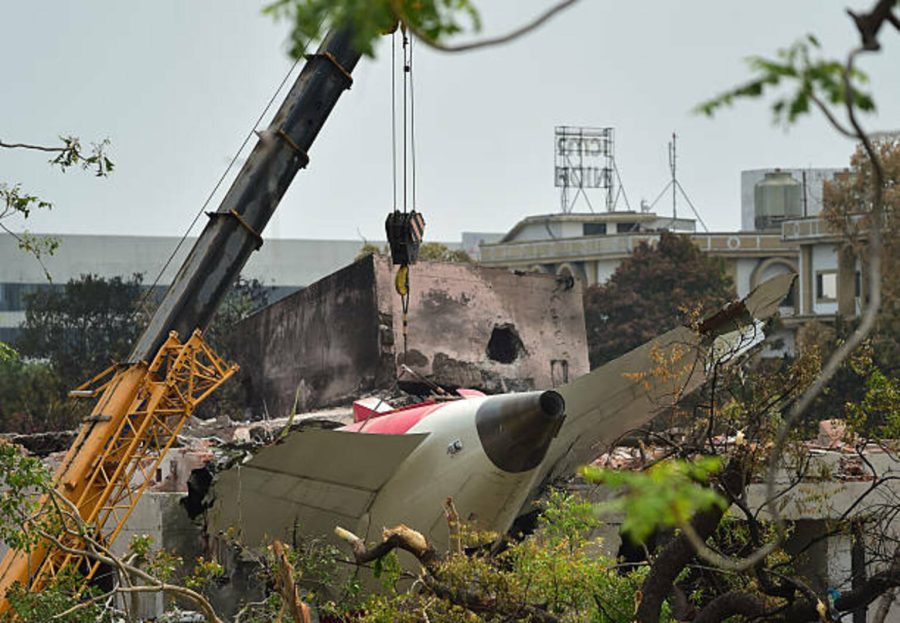
Ritesh Shukla/Getty Images News
Boeing (NYSE:BA) shares saw a modest uptick early Monday as the aviation world awaits new information from the flight recorders recovered after the deadly crash of Air India Flight 171. The Boeing (NYSE:BA) 787 went down on June 12, crashing less than a minute after departing from Ahmedabad airport.
Efforts to extract and analyze data from the aircraft’s flight recorders began last week in Delhi, raising hopes that investigators may soon have clarity on what triggered the accident, columnist Al Root reported in Barron’s on Monday.
Since the accident, Boeing (BA) shares have remained mostly flat. Meanwhile, GE Aerospace (NYSE:GE), which supplied the jet’s engines, has seen its stock rise nearly 4%. The aircraft, a 12-year-old Boeing 787, was equipped with GEnx engines and had logged roughly 41,700 flight hours across 7,800 trips. Maintenance records indicate the aircraft underwent a major “C check” inspection in 2023, with engine overhauls completed earlier this year.
GE (NYSE:GE) also provided the jet’s flight-data and cockpit voice recorders, according to reports. Both Boeing (BA) and GE (GE) declined to comment on the status of the recorders, which is standard practice as such matters typically fall under the jurisdiction of aviation regulators.
India’s Directorate General of Civil Aviation also did not offer a statement on the recorders.
The Boeing (BA) 787 model is equipped with two Enhanced Airborne Flight Recorders, one located at the front of the aircraft and the other at the rear. These devices capture both flight data and cockpit audio. Despite being nicknamed “black boxes,” they are painted bright orange to assist in recovery efforts and are built to withstand extreme impacts, roughly 3,500 times their own weight, according to Barron’s.
By regulation, the recorders must capture a minimum of 88 flight metrics, including airspeed and altitude, although most modern systems gather significantly more data. Voice recordings typically cover the most recent 25 hours of cockpit conversations.
Indian Minister of State for Civil Aviation, Murlidhar Mohol, said in a recent interview that investigators are focusing on why both engines failed. Possible causes under review include issues related to fuel, electrical systems, and hydraulics.
A full investigation report is expected in the coming months, though preliminary findings may be released in the weeks ahead, potentially providing early insights into what went wrong.
Air India operates more than 30 Boeing 787 aircraft, all of which have been inspected following the crash, with no major issues reported, according to Barron’s.
More on Boeing, GE Aerospace
- GE Aerospace: Too Much Hype, Upside Is Slim
- Boeing: A Surprise Lead Over Airbus
- Boeing Deserves A Little More Love (Rating Upgrade)
- Boeing’s Spirit AeroSystems takeover faces U.K. competition scrutiny
- Weekly top industrial gainers and losers: Generac Holdings, Boeing lead, Lockheed Martin ends in red