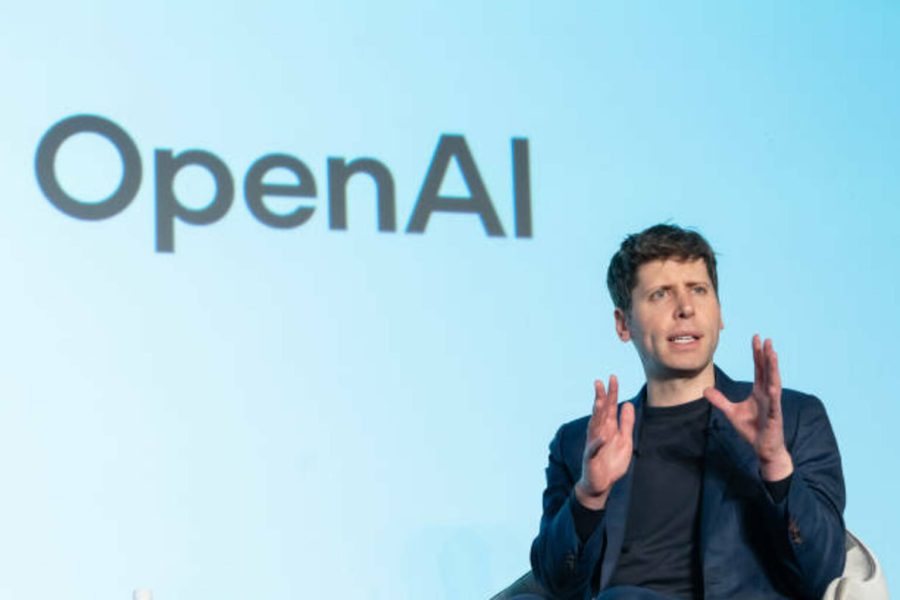
OpenAI’s (OPENAI) AI video app Sora has hit 1 million downloads in less than five days after its launch in late September, according to a company executive.
“Sora hit 1M app downloads in <5 days, even faster than ChatGPT did (despite the invite flow and only targeting North America!),” said Bill Peebles, head of Sora at OpenAI in a post on X. “Tteam working hard to keep up with surging growth. more features and fixes to overmoderation on the way!”
Sora allows users to generate short videos for free by writing a prompt. The app is only available on iOS devices and is invite-based. Despite these restrictions, Sora has reached the No. 1 spot in Apple’s App Store.
Earlier on Thursday, it was reported that Hollywood talent agency Creative Artists Agency said that OpenAI is exposing artists to “significant risk” through Sora. The app faces heat, namely around whether it infringes on copyrights.
Last week, OpenAI’s CEO Sam Altman noted that the company will soon unveil controls allowing the owners of content rights to decide how their characters are used in Sora, and plans to share revenue with those who permit such use.
OpenAI and Anthropic’s AI coding race
Separately, The Information reported that Microsoft (NASDAQ:MSFT)-backed OpenAI is catching up to Anthropic (ANTHRO) in AI coding.
New data shows that OpenAI’s Codex coding assistant has surpassed Anthropic’s Claude Code assistant in certain coding capabilities.
Anthropic and OpenAI did not immediately respond to a request for comment from Seeking Alpha.
Codex usage among developers is also catching up to Claude Code’s. Developers approved 74.3% of code written by Codex, a bit higher than Claude Code’s 73.7% success rate in terms of approving code pull requests, as per data from over 300,000 pull requests collected by startup Modu, the report added.
Pull requests are proposed changes to code.
Modu, a startup that was founded in June, has valuable data because it helps software developers access several coding assistants including Codex, Claude Code, Cursor, Devin and more.
However, Modu is not the only one making these claims. Over the last month, developers on X and Reddit — even in Claude Code’s subreddit — have pointed out improvements in Codex’s performance, the report added.
Modu has not yet added GitHub Copilot and Google’s Jules agent to its benchmarks, according to the report.
A key reason behind the improvement in OpenAI’s coding AI performance is the release of GPT‑5-Codex for coding last month. Before the release, OpenAI’s Codex model had a 69% success rate for code it produced, said Brexton Pham, cofounder of Modu.
In spite of, the improved performance following the latest Codex release, Codex still trails Claude Code in usage: the percentage of merged pull requests created with Codex via Modu is 24.9%, versus 32.1% for Claude Code. That’s an improvement of five percentage points compared to before the release of GPT-5-Codex, Pham said, the report noted
Codex has become better at coming up with a gameplan for more complex coding tasks, and it is less costly than Claude Code, based on the data Modu collects from its customers. Many of Modu’s customers access OpenAI and Anthropic’s models for coding via their APIs, Pham noted, as per the report.
However, Pham pointed out that cost is not as big factor for developers when choosing their coding assistant. Developers are willing to pay more right now because many of them believe costs will drop over time, but some initial data hasn’t quite shown that to be the case, the report added.
Pham noted that for CEOs whose companies use such products, it is cheaper to pay for coding assistants to bolster existing software engineers than it is to hire more human software engineers.
Modu’s data also shows that the coding assistant whose output is most likely to be accepted by developers — with a 76.8% acceptance rate — is Sourcegraph’s Amp agent.
Sourcegraph is a San Francisco-based startup.
Pham characterizes Sourcegraph as the “boutique, luxury” product in the market currently because it tends to be more expensive, but better performing, than alternatives, the report added. Google’s Gemini CLI is the cheapest coding assistant, as per Pham.
Gemini command line interface, or CLI, is an open-source AI agent that provides access to Gemini directly in the user’s terminal.
For Anthropic, its coding technology is the driving force behind its revenue, which mostly comes from sales of its AI models via an application programming interface to customers such as Microsoft, Cursor and Lovable. Meanwhile, OpenAI has a ChatGPT business that is less reliant on coding. However, its leaders view coding as a key area of developing artificial general intelligence and last year boosted efforts to improve its models in coding, the report noted.
AI startup Anthropic is backed by Amazon (AMZN) and Alphabet’s (GOOG) (GOOG) Google.