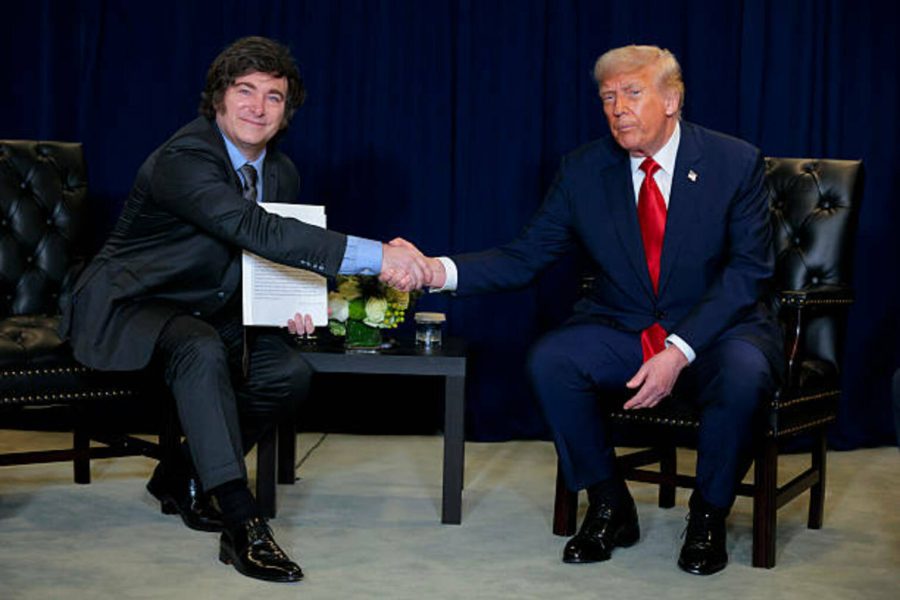
Argentina’s central bank (BCRA) has signed a $20B currency stabilization agreement with the U.S. Treasury Department, less than a week before the country’s key midterm legislative elections.
The agreement establishes the terms for bilateral currency swap transactions. “These transactions will allow the central bank to expand its range of available monetary and exchange rate policy instruments, including strengthening the liquidity of its international reserves,” the BCRA said.
Even so, the Argentine peso (ARS:USD) weakened against the U.S. dollar on Monday, trading at levels seen before U.S. Treasury Secretary Scott Bessent pledged support for Argentina.
Meanwhile, a group of U.S. banks is seeking collateral to back a $20B debt facility for Argentina, to ensure that the lenders will get their money back, The Wall Street Journal reported.
The group, which includes JPMorgan Chase (JPM), Bank of America (BAC), Goldman Sachs (GS) and Citigroup (C), wants to limit exposure to the financially distressed country.
The banks are waiting on guidance from the U.S. Treasury Department on possible collateral from Argentina or if Washington would backstop the loan facility, people familiar with the matter told WSJ.
The debt facility is not yet finalized and may fall apart if the collateral issue is not worked out. A Treasury spokesperson said discussions are ongoing.
In other news, President Donald Trump suggested importing more beef from Argentina to help reduce U.S. beef prices. Argentina accounted for about 2% of total U.S. beef imports last year.
U.S. cattle ranchers have pushed back against Trump’s suggestion, warning that increasing imports would threaten their livelihood. U.S. farmers are already losing out to Argentina in terms of soybean sales to China.