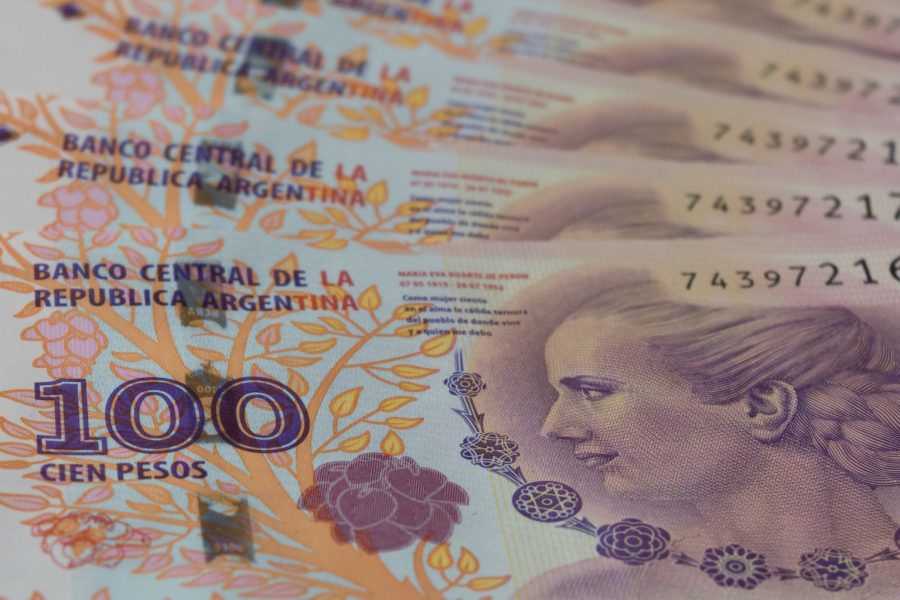
Recently, the Trump administration announced a $40 billion plan to shore up Argentina’s ailing economy that includes $20 billion in financing from sovereign wealth funds and major U.S. banks.
We asked Seeking Alpha analysts Labutes IR, Ian Bezek, and Bernard Zambonin which banks they see being impacted by the bailout.
Labutes IR: The bailout is positive for the banking sector in general because it stabilizes the currency and sovereign yields and is especially positive for banks like Banco Macro (BMA) and Grupo Galicia (GGAL) that have larger exposure to sovereign debt among Argentina’s private banks. For banks that are reportedly also involved in the swap line and private funding, such as Santander (SAN) or JPMorgan (JPM), the impact would be more modest, in my opinion.
Ian Bezek: I would expect all four U.S.-listed Argentine banks to see a positive impact from the Argentine bailout. My favorite two are Grupo Galicia (GGAL) and Banco BBVA Argentina (BBAR).
Grupo Galicia is a well-run bank with a reputation for strong profitability (21% median ROE past decade). Its relatively large size and market cap should make it a logical pick as foreign investors look to deploy more capital in Argentina.
BBVA Argentina (BBAR) is a smaller bank, but it has been growing its market share in Argentine private credit, and that could set it up for dramatic upside as Argentina’s economy picks up steam thanks to U.S. financial aid and Milei’s ongoing market reforms.
Bernard Zambonin: I believe that the impact of the bailouts will be broad-based and positively affect the financial system as a whole, as well as Argentine equities in general. But banks with greater exposure to public debt and central bank instruments, as in the case of Santander Argentina, which is controlled by Banco Santander S.A. (SAN), and Grupo Galicia (GGAL), are more likely to feel the strongest effects on their fundamentals, as improving sovereign conditions tend to reprice these assets upwards.
On the other hand, peers such as Banco BBVA Argentina (BBAR) and Banco Macro (BMA), which have a greater focus on private credit, should benefit more indirectly through systematic risk reduction and a more stable monetary regime.
In general, a backdrop of fiscal discipline as well as a normalization of the balance sheet also tends to reward players with a more conservative structure and less dependence on the public sector. So, in a way, it’s still a major win for all incumbents.