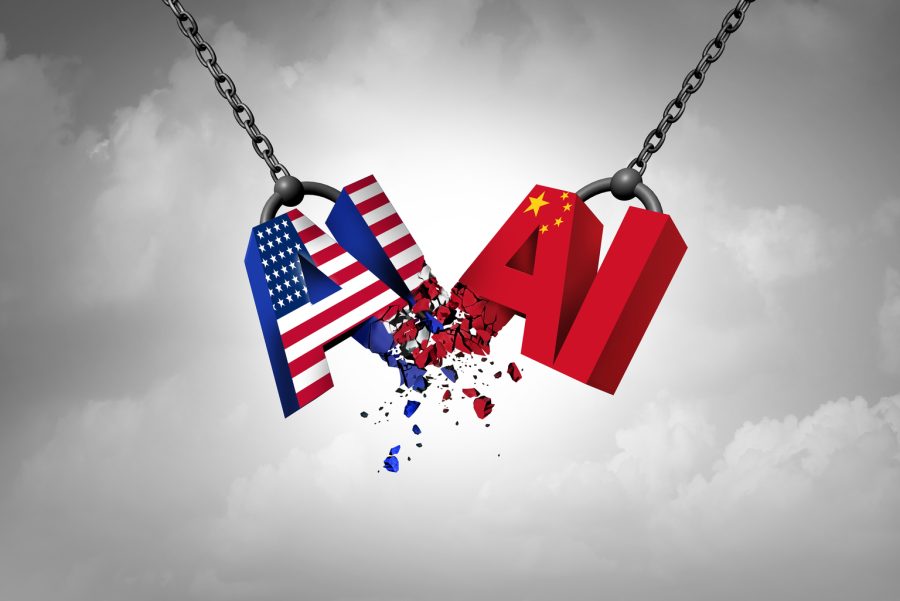
Nvidia CEO Jensen Huang predicts that China will surpass the United States in the race to dominate artificial intelligence.
He told the Financial Times he attributes China’s potential victory to its more favorable regulatory environment and lower energy costs.
Speaking on the sidelines of the FT’s Future of AI Summit, Huang criticized the western approach, describing it as “cynicism” that hampers progress.
China’s data centers benefit from substantial energy subsidies, making it easier for tech giants like ByteDance (BDNCE), Alibaba (BABA), and Tencent (OTCPK:TCEHY) to afford the operation of their AI technologies. This contrasts with the United States, where regulatory constraints loom large.
Huang highlighted the potential burden of “50 new regulations” from individual states, which could stifle innovation and competition in AI.
The U.S. has maintained a firm stance on restricting sales of Nvidia’s advanced chips to China, a policy emphasized by President Donald Trump after his meeting with Chinese President Xi Jinping. Although Trump is open to negotiating the sale of a modified and less advanced version of Nvidia’s Blackwell chips, he remains insistent on reserving the cutting-edge technology exclusively for the U.S.
Nvidia has actively engaged with U.S. government allies to navigate potential challenges. The company recently achieved a milestone with its market capitalization reaching $5 trillion, buoyed by market excitement over the potential reopening of negotiations with China.
Despite these achievements, the rise of Chinese AI labs like DeepSeek (DEEPSEEK) represents a growing challenge. The sophisticated language model released by DeepSeek has sparked debates in Silicon Valley about the ability of U.S. companies such as OpenAI and Anthropic to maintain their technical superiority.