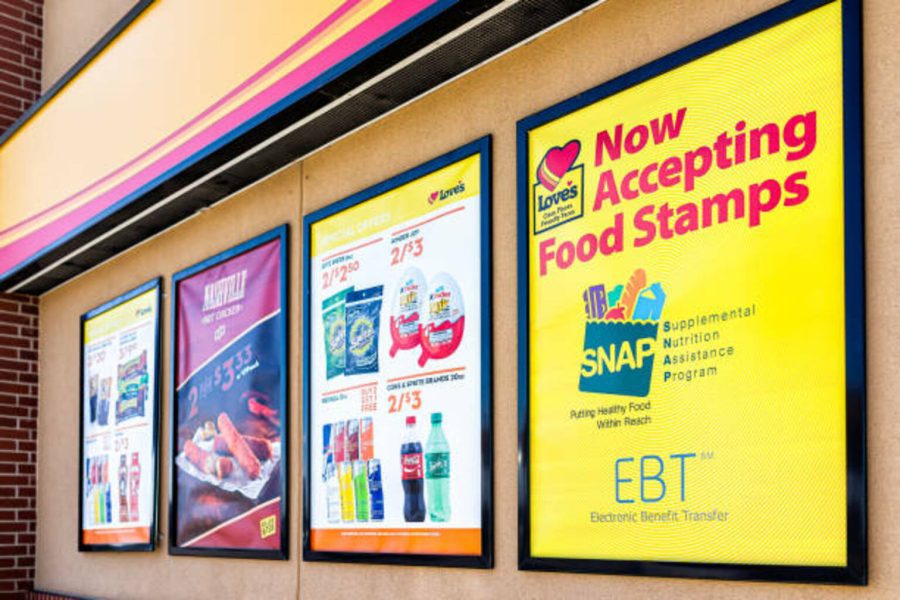
As Congress works towards ending the government shutdown, the Supreme Court extended a pause on a federal judge’s order that the Trump administration must immediately pay food stamps for this month.
This means that the government can continue withholding around $4B from the Supplemental Nutrition Assistance Program till midnight on Thursday.
The House is expected to vote on a short-term government funding bill as early as Wednesday to end the shutdown, after the Senate approved the legislation on Monday.
The bill would extend current levels of government funding through Jan. 2026, and fund certain agencies and programs through Sept. 2026 – including SNAP.
It’s unclear how quickly SNAP payments would resume once the government reopens. Around 42M Americans, or one in eight, rely on SNAP.
The lapse in SNAP benefits has further strained low income households, an issue that several company executives mentioned in recent earnings calls.
McDonald’s (MCD) CEO Chris Kempczinski said the SNAP disruption added to the pressure on low-income consumers, who are already struggling with high rents, food prices and childcare costs.
Kristina Lambert, chief growth officer at Tyson Foods (TSN), said the company was closely monitoring the situation. “We do see consumer spending patterns, again, changing from nonfood to more food categories, but we feel resilient and well positioned to navigate those challenges.”
“SNAP, even if there is some disruption, will be paid in the future and will be retroactive,” Pilgrim’s Pride (PPC) CEO Fabio Sandri affirmed, adding that demand “will come back again after SNAP is paid.”
Instacart’s (CART) CFO Emily Maher said SNAP benefits are a “relatively small” part of its overall business, while Hershey (HSY) CEO Kirk Tanner said SNAP disruption would have “minimal” impact.