Rocket Lab Corporation (RKLB) announced the successful launch of its two Explorer-class spacecraft. The launch was a part of NASA’s ESCAPADE mission, in collaboration with the University of California Berkeley’s Space Sciences Laboratory.
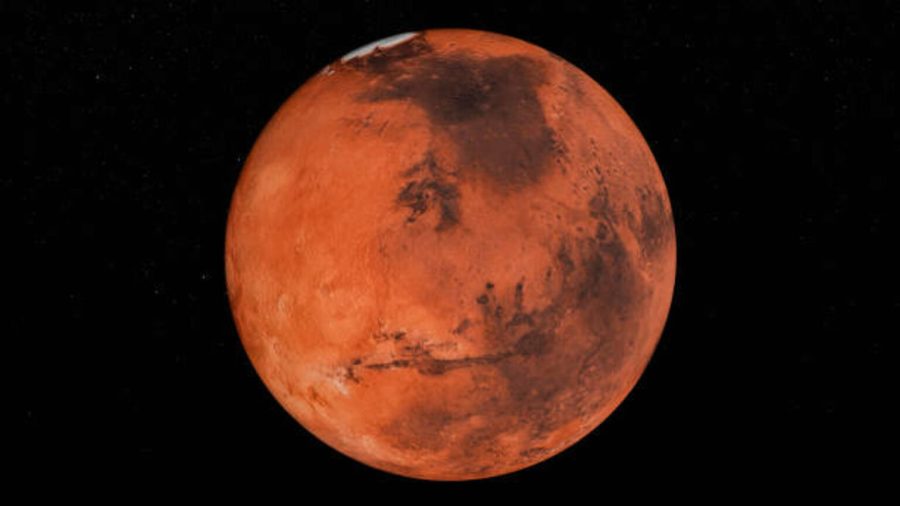
Launched on November 13 by Blue Origin (BORGN) from Cape Canaveral, these spacecraft are en route to Mars to study the planet’s magnetosphere. Rocket Lab (RKLB) quickly established contact with the spacecraft, which are now generating power and will soon undergo a commissioning process involving system checkouts and preparations for deep space maneuvers. The ESCAPADE mission was built using Rocket Lab’s (RKLB) advanced Explorer-class platform, which is noteworthy for its rapid development cycle of just three and a half years due to the company’s vertically integrated approach to spacecraft manufacturing.
Unlike traditional Mars missions, which require decades and vast budgets, ESCAPADE was noted to demonstrate that interplanetary science can be achieved more quickly and cost-effectively. The spacecraft will initially enter a loitering orbit near Earth’s Lagrange point 2, awaiting the next favorable alignment for Mars transfer, which is expected in fall 2026. They are scheduled to arrive at Mars in September 2027 and begin scientific observations in 2028. In addition, the mission will investigate how solar wind affects Mars’ atmosphere, which will deepen scientific understanding of the planet’s atmospheric history and offer valuable data for future human exploration strategies.
Shares of Rocket Lab (RKLB) fell 5.2% in premarket trading on Friday after shedding 9.5% on Thursday amid broad risk-off market declines. Short interest on RKLB stands at 10.3% of the total float.