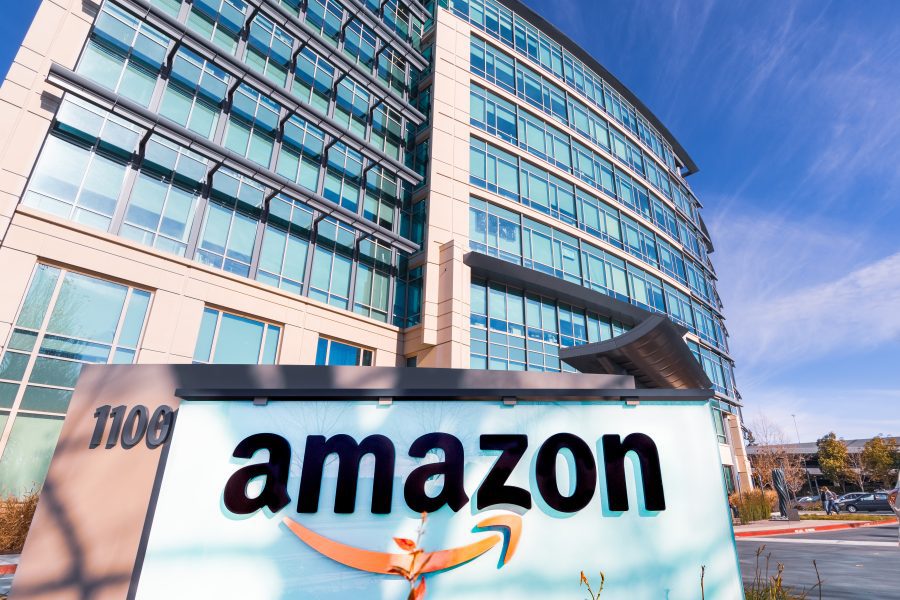
The EU’s General Court dismissed a request by Amazon (AMZN) to scrap its designation as a ‘very large online platform’ under the bloc’s Digital Services Act.
“DSA: Amazon’s action against the Commission’s decision designating the platform Amazon Store as a ‘very large online platform’ is dismissed,” said the General Court.
The Court of Justice of the European Union, or CJEU, consists of two courts — the Court of Justice and the General Court.
The EU’s DSA regulates online intermediaries and platforms, which millions of Europeans use every day. The DSA protects consumers and their rights online, and its main goal is to prevent illegal and harmful activities online and the spread of disinformation. Very large online platforms, or VLOPs, with more than 45 millionusers in the EU come under DSA. Certain services from companies like Apple (AAPL), Alphabet (GOOG) (GOOGL) Meta Platforms (META), Amazon, Alibaba (BABA), Microsoft (MSFT), ByteDance’s (BDNCE) TikTok and X, formerly Twitter, are subject to rules under the DSA.
Amazon had contested that the provision infringes several fundamental rights guaranteed by the Charter of Fundamental Rights of the EU, including the freedom to conduct a business, the right to property, the principle of equality before the law, freedom of expression and information, and the right to private life and the protection of confidential information.
The General Court said that “interference, which is provided for by law and does not affect the essence of the freedom to conduct a business, is justified for the purpose of the Charter of Fundamental Rights. The EU legislature, which has a broad discretion, did not commit a manifest error in considering that very large online platforms, including marketplaces exceeding the threshold of 45 million users, could pose systemic risks to society, in particular by disseminating illegal content or infringing fundamental rights, including consumer protection.”
The court noted that the obligations imposed on those platforms, such as those relating to the option of a recommender system which is not based on profiling, the public repository of advertisements or researchers’ access to certain data, are intended to prevent those risks, even if they “entail significant financial burdens for those platforms.”
The court also dismissed all other arguments by the U.S. online retail and tech giant.
Amazon did not immediately respond to a request for comment from Seeking Alpha.
Amazon told Reuters that it was disappointed in the ruling and that it intended to launch an appeal.
“The Very Large Online Platform status was designed to address systemic risks posed by very large companies with advertising as their primary revenue and that distribute speech and information,” said the company, the report added. “The Amazon Store, as an online marketplace, does not pose any such systemic risks; it only sells goods, and it doesn’t disseminate or amplify information, views or opinions.”