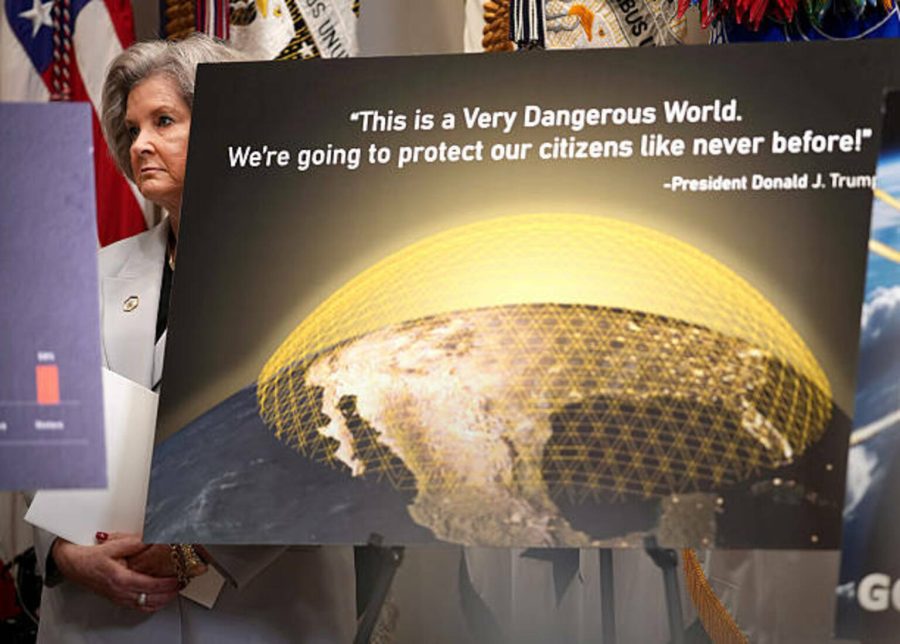
The U.S. Space Force quietly issued a series of small contracts to begin building prototype space-based interceptors, taking an early step toward a key component of President Donald Trump’s Golden Dome missile-defense project, Bloomberg News reported Tuesday.
Each award is valued at under $9 million, keeping them below the disclosure thresholds required for larger Pentagon programs.
Officials said the evaluation process was extensive and emphasized that the goal is to move quickly with industry partners to design, test, and deliver early interceptor models. The Space Force didn’t release the names of the selected contractors, citing heightened security requirements for the effort.
The agreements were issued under the Pentagon’s “Other Transaction Authority,” a flexible contracting mechanism frequently used for rapid prototyping, particularly in software. Limited disclosure has become a pattern for the Golden Dome program, which Trump has described as a roughly $175 billion endeavor that he expects to deliver before leaving office, a timeline and price tag analysts consider highly optimistic.
Developing interceptors capable of performing in space remains one of the most significant technical hurdles. In a late-September report, Congressional Research Service analyst Hannah Dennis pointed to unresolved issues such as distinguishing actual missile threats from debris and decoys.
It also remains unclear how much funding has been formally obligated so far. Congress approved $25 billion for Golden Dome activities this fiscal year, including $5.6 billion specifically directed toward space-based and boost-phase interception technologies.
According to the Pentagon, the overarching architecture for the system has now been set, and its implementation plan is under review. The department said it is taking steps to shield the program’s technological advances from foreign adversaries seeking to exploit them, Bloomberg News reported.