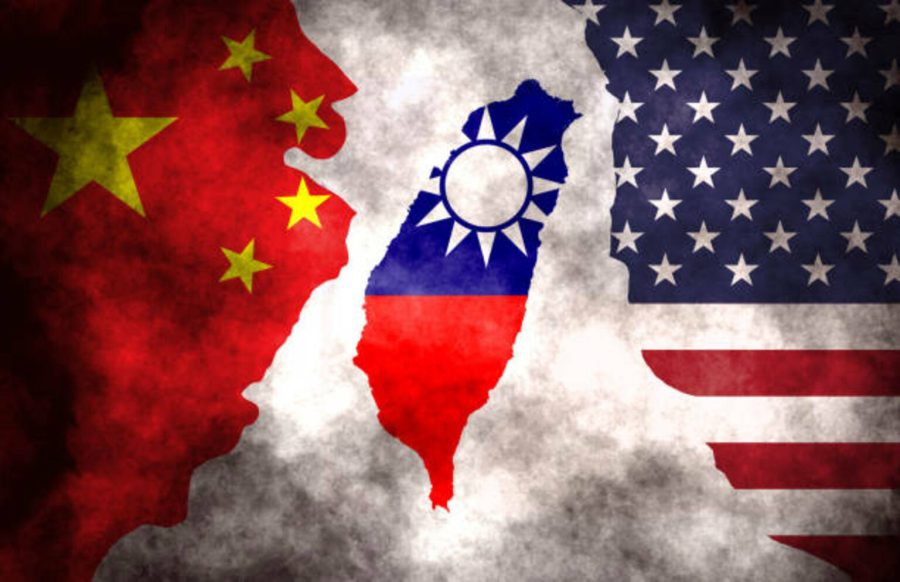
According to recent reports, the Chinese government may be eyeing a takeover of Taiwan next year ahead of the 100th anniversary of the founding of the People’s Liberation Army.
Concerns about a potential takeover of Taiwan, currently the world’s largest producer of semiconductors, have vexed the tech industry for years. We asked Seeking Alpha analysts Victor Dergunov, Cestrian Capital Research, and Jonathan Weber how a takeover could impact the global chip sector.
Victor Dergunov: A forceful reunification of Taiwan with the Chinese mainland would be disastrous for the global chip sector as well as world economic stability in general. The global technology segment could essentially come to a standstill if Taiwan Semiconductor’s (TSM) operations were seriously disrupted.
However, much would depend on the way a possible takeover of Taiwan occurs. Military means would be challenging, even for China, and could drag the U.S. and other nations into the conflict, making it a less optimal approach for all.
A takeover in some peaceful way would be much easier for the chip sector and the world to absorb. The negative effects would likely be transitory, and the global chip sector would likely recover more quickly in a peaceful takeover case.
Cestrian Capital Research: The world order established in the wake of the Second World War is in the process of being remade. Many of the pieces have been tossed into the air, and no one is quite sure when or where they are going to land.
One such piece is Taiwan, which, from an investment perspective, can be boiled down to Taiwan Semiconductor Manufacturing Company (TSM). Forged as a joint venture between a European corporation, Philips, and the Taiwanese government, TSMC has out-innovated and out-spent all its competitors in the merchant semiconductor fabrication business. If you use devices with small form factor advanced chips, chances are they were made by TSMC.
The potential throttling of TSMC output, should China physically or financially take control of Taiwan, is a threat of which investors and industrialists need to be keenly aware. The mitigation efforts underway by the U.S. federal government—most recently the Genesis Mission—are substantial and manifold but may be starting too late. The semiconductor sector moves quickly.
Investors who own positions in chip sector stocks need to be alert to this risk. The semiconductor sector remains a cyclical industry and should be treated as such; concerned investors need to be ready to move to cash or hedge their positions with inverse ETFs such as ProShares UltraShort Semiconductors (SSG) or Direxion Daily Semiconductor Bear 3X Shares (SOXS).
Jonathan Weber: Hopefully war can be avoided, but if tensions between Taiwan and China were to escalate, Taiwan Semiconductor Manufacturing Company (TSM) could be very highly impacted. Since TSM is so essential to the global chip supply chain, companies such as Apple (AAPL), Nvidia (NVDA), and Advanced Micro Devices (AMD) could be severely impacted as well.
Other sectors and countries could also be significantly affected due to the chip industry’s importance to the global economy. Chip production outside of Taiwan, e.g., by Intel (INTC), would be essential to maintain at least some supply.