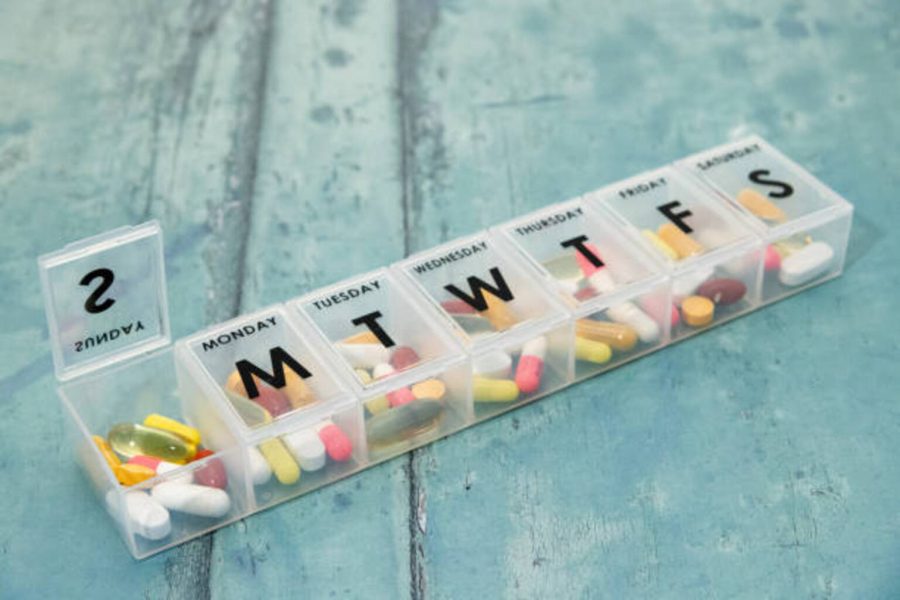
Early prescription refills by U.S. pharmacies cost Medicare and patients $3B in 2021–2023, with mail-order pharmacies run by UnitedHealth (UNH) and Humana (HUM) leading the cost overruns, according to a study conducted by the Wall Street Journal.
The study, based on details of each prescription sent to more than 50M Medicare beneficiaries between 2021 and 2023, found that mail-order pharmacies accounted for 37% of the excess dispensing even though they filled only 9% of Medicare prescriptions.
Some insurers require their customers to use 75% of a prior supply, or day 68 for a 90-day refill, before sending prescription refills. However, according to the WSJ, UnitedHealth’s (UNH) mail-order pharmacies sent refills sooner than the 68-day threshold 11% of the time, nearly nine times faster than other Medicare pharmacies.
Over the three years, UnitedHealth (UNH) delivered $142 worth of excess medications per Medicare patient, the most among any major pharmacy operator, while Humana (HUM) came second with $93 worth of extra drugs per recipient.
CVS Health’s (CVS) mail-order pharmacy and Cigna’s (CI) Express Scripts cost Medicare $45 and $44 worth of extra medications per patient, respectively.
While Medicare requires drug plans that administer the federal health program to set limits on early prescription refills, the government relaxed those rules in 2020 as part of its pandemic response, allowing early refills for some time.
Both UnitedHealth (UNH) and Humana (HUM) noted that since 2023, when COVID-era emergency rules ended, they have rejected more early refills than the period considered in the study.
“The data does not reflect current practices,” a spokesperson for UnitedHealth (UNH) said, adding that the company denied up to five times as many early refills in 2024 compared to 2021 and 2022.
Humana (HUM) argued that its current practices “strike the right balance, allowing sufficient time to fill and ship prescriptions and supporting medication adherence without encouraging stockpiling.”