Lockheed Martin (LMT) +4.2% to a 52-week high $543.08 in Friday’s trading, as Truist Securities upgraded shares to Buy from Hold with a $605 price target, raised from $500, saying Lockheed’s FY 2025 underperformance coupled with attractive valuation creates a compelling risk/reward profile in 2026.
While the F-35 remains an easy target, Truist analyst Michael Ciarmoli said DOGE fears have largely subsided, and anticipates improved execution and operational performance in 2026 along with lower EACs and sees Lockheed’s (LMT) MFC segment pacing the top line with double-digit growth amid capacity expansions and robust global demand, while ongoing geopolitical tensions should continue to drive demand supporting program production ramp-ups and new capabilities coming online.
Ciarmoli touted Lockheed’s (LMT) missile portfolio as well-positioned to take advantage of missile demand across its top programs, noting a recent seven-year agreement with the U.S. government to increase PAC-MSE capacity from ~600 to ~2,000 that is an outcome of the Acquisition Transformation Strategy to boost operational efficiency, and a $4.24B contract from the U.S. Army to boost GMLRS production from 10,000 missiles to 14,000 by 2027, reflecting 40% growth.
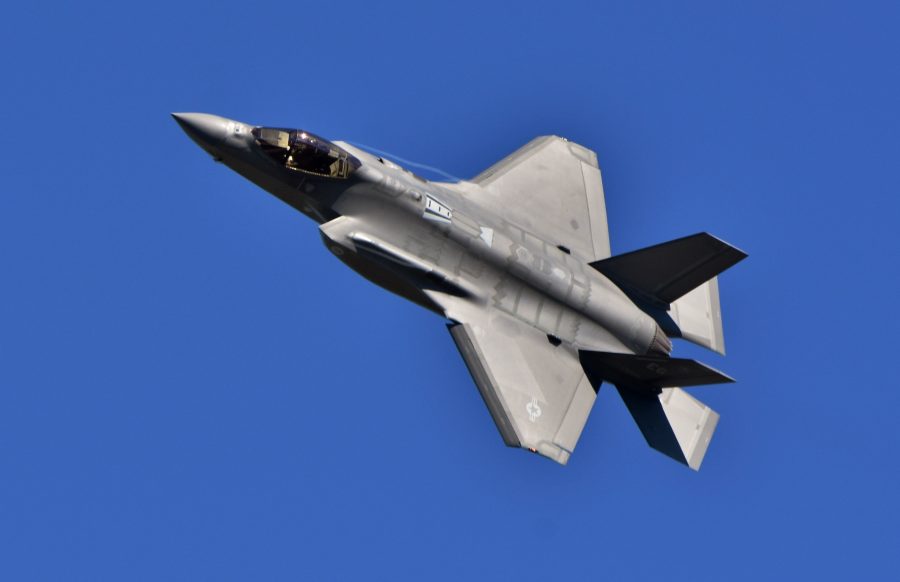
The analyst sees stability and perhaps modest opportunities for the F-35, given production should hold 150-160 aircraft over the next five years, and other traditional large-scale programs should begin to ramp, driven by demand stemming from continued geopolitical tensions and desire to replenish inventories and modernize capabilities.
However, Ciarmoli downgraded Northrop Grumman (NOC) to Hold from Buy with a $623 PT, reduced from $688, as he believes the company will maintain its leading prime positions across the nuclear triad and various other in-demand platforms and capabilities while seeing some limitations to further upside to financials over the next 12-24 months.
The analyst noted Northrop’s (NOC) valuation reflects these positives while perhaps not factoring in unforeseen margin and free cash flow pressures, and shares trade at a 20% premium to its prime peers on price/FCF and relative to its own historical average FCF multiple that trades at a 28% premium.