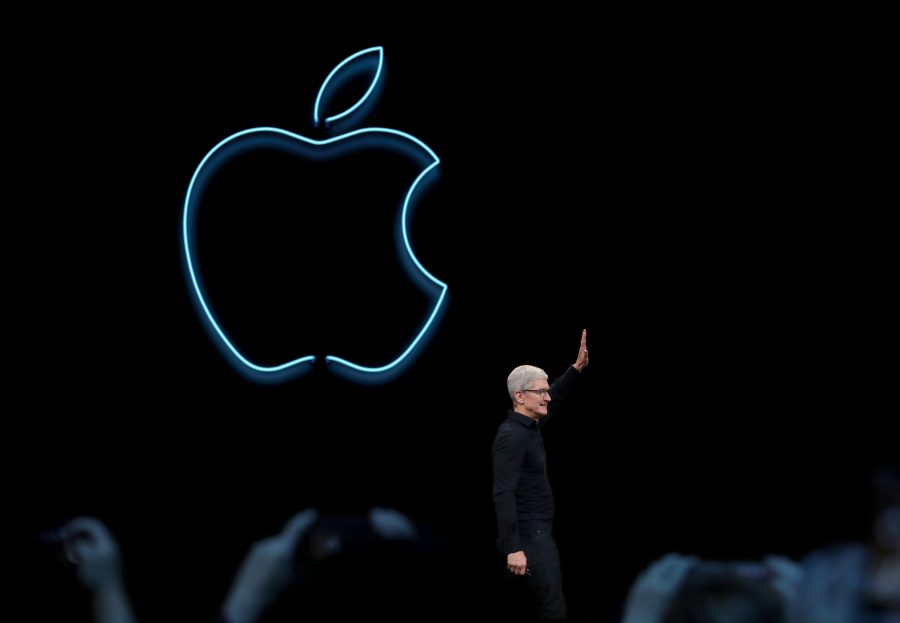
Apple (AAPL) CEO Tim Cook’s full compensation package for 2025 showed a slight decline in 2025 compared to 2024, while other key executives’ compensations also demonstrated a slim drop.
Cook’s compensation totaled $74.3M in 2025, according to a filing with the U.S. Securities and Exchange Commission. It totaled $74.6M in 2024. Cook’s base salary of $3M has remained the same since 2016.
“Mr. Cook’s outstanding equity awards include a retirement vesting provision approved by the People and Compensation Committee in recognition of the unique impact of his leadership decisions on the long-term growth and success of Apple and to facilitate thoughtful succession planning when appropriate,” the filing said. “Retirement is defined as a termination of employment after reaching at least 60 years of age and completing at least 10 years of service with Apple. Mr. Cook has met these requirements.”
Other top Apple executives had very slight declines in their compensation. Kate Adams, senior vice president and general counsel and secretary, package was worth $27.03M compared to $27.18M in 2024. Deirdre O’Brien, senior vice president of Retail and People, received $27.05M compared to $27.18M in 2024. Kevan Parekh, who is in his first year as chief financial officer, received $22.46M. Former chief financial officer Luca Maestri received $15.48M.
Apple plans to hold its 2026 annual shareholders meeting at 8 a.m. PT on February 24.
Shareholders are expected to vote on five items of business in the upcoming annual meeting. The board recommends voting for the first four items, which include election of directors, appointment of an independent registered public accounting firm, executive compensation and Apple’s non-employee director stock plan.
However, the board recommends shareholders vote against a proposed “China entanglement audit.”
“With escalating U.S.–China trade tensions, Apple could face steep tariff increases,” according to the shareholder proposal. “Analysts warn tariffs on Chinese imports could hit as high as 145%, severely inflating production costs. One article projects this could add $10B annually to iPhone expenses. While Apple is apparently shifting some production to India and Vietnam, these regions still depend heavily on Chinese parts, and manufacturing costs are 5–10% higher.”
The proposal also warns that China may restrict support from Chinese engineers and suppliers. It points out that nearly 20% of Apple’s revenue stems from Mainland China, Hong Kong and Taiwan, and a regional conflict could disrupt that. It also mentions supply chain disruptions, China’s control over rare earth minerals and Chinese espionage.
“Shareholders request that the Board of Directors of Apple conduct an evaluation and issue a report within the next year, at reasonable cost and excluding confidential information, assessing risks and costs associated with the company’s continued entanglement with the People’s Republic of China,” the filing said.
But the board maintains that Apple already provides extensive information on its international operations.
“The proposal is highly prescriptive and attempts to inappropriately restrict Apple’s ability to manage its own ordinary business operations and business strategies,” the board said.