Following its coverage of CES 2026 last week, the financial firm BNP Paribas identified robotics as a key emerging market in the tech sector, with use cases about to take off.
Artificial intelligence also continues to embed itself in everything, while the technology in augmented reality glasses is demonstrating marked improvement.
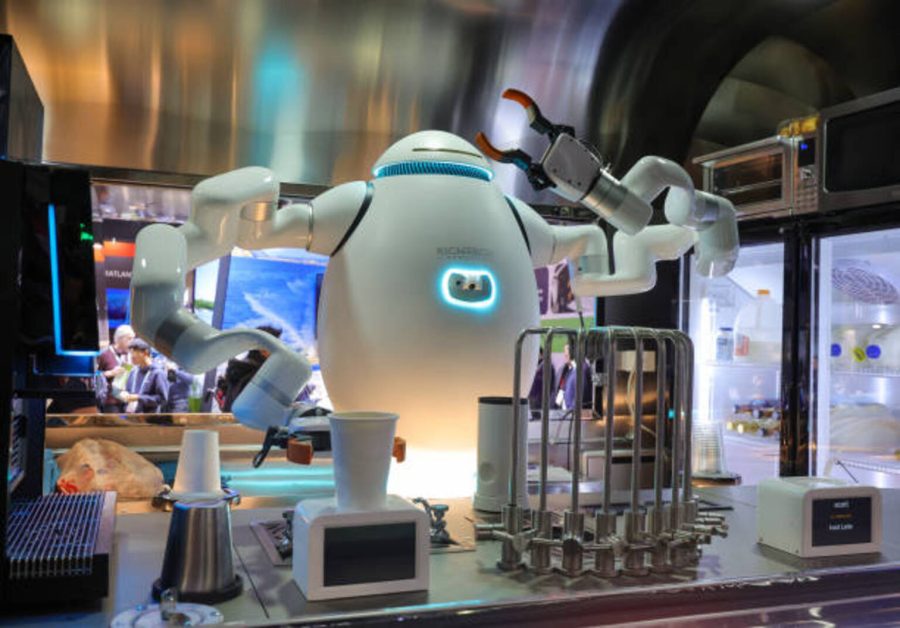
“AI continues to proliferate across all devices and end markets,” said BNP Paribas analysts David O’Connor and Karl Ackerman in an investor report. “Most positive we found was robotics, which feels like it’s on the cusp of adoption, and AR glasses are gathering steam. Robotics seems to be almost there in terms of takeoff but still lacks a volume catalyst. AR glasses still have design challenges, but we are seeing a strong customer push to get these resolved.”
Nvidia (NVDA) emerged once again as a clear winner in the AI era, but AMD (AMD) is also set to benefit from higher CPU demand.
“While the associated compute storage opportunity offers the potential for NVDA to capture more AI server content,” O’Connor noted. “Company is bullish on the Groq licensing opportunity, and we think it allows NVDA to capture more of the fragmenting AI inference silicon TAM. Agentic AI is real and driving higher demand for CPU servers (supply constrained) should benefit AMD the most within our coverage.”
BNP also discussed the implications for Nvidia’s new Vera Rubin platform, which features six new chips.
“What’s most interesting to us is the announcement of Inference Context Memory Storage Platform to address KV caching demand, and Jensen Huang indicated that ICMS could support 16TB per GPU of storage,” the analysts said. “We estimate that the total compute storage content could increase 150% from 8TB per Blackwell to 20TB per Rubin. We see a structural shift towards data center happening in the NAND flash market, supporting 20%+ bit CAGR until ’28.”
They also added that the memory crunch in 2026 will affect consumer end markets the most as memory vendors are prioritizing AI-related demand.