Seeking Alpha’s roundup of statements, announcements, and remarks that could impact the technology sector.
- Taiwanese tech companies will directly invest at least $250B to expand chip, energy, and AI production and capacity in the U.S. under a newly announced trade agreement.
Under the deal, the Taiwanese government has also agreed to provide $250B in credit guarantees “to facilitate additional investment by Taiwanese enterprises, supporting the establishment and expansion of the full semiconductor supply chain and ecosystem in the United States,” according to a Commerce Department statement.
In return, the U.S. will lower its “reciprocal” tariff on Taiwanese goods to no higher than 15%. No tariff will be imposed on generic pharmaceuticals, drug ingredients, aircraft components, or certain natural resources, the statement added.
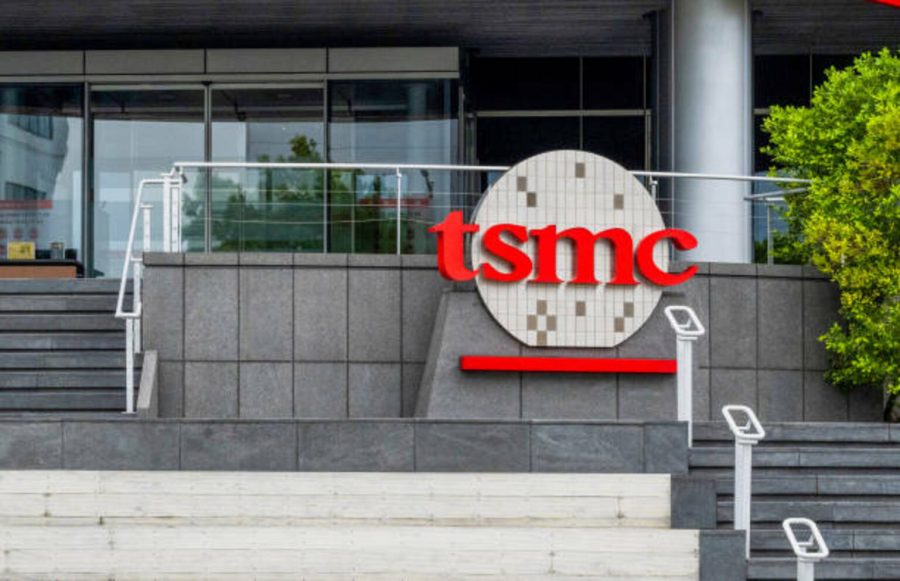
- Commerce Secretary Howard Lutnick said that as part of the new Taiwan deal, chipmaking giant Taiwan Semiconductor (TSM) could be expanding its operations in Arizona soon.
“They just bought hundreds of acres adjacent to their property,” Lutnick said during an interview with CNBC on Thursday. “I’ll let them go through with their board and give them time.”
Lutnick said Taiwanese chip companies that don’t build facilities in the U.S. could face a 100% tariff, adding the administration’s goal was to bring 40% of the Taiwanese chip supply chain to the U.S.
- Rio Tinto (RIO) said that Amazon’s (AMZN) AWS has become the first customer for low-carbon copper produced by its Nuton unit at the Johnson Camp mine in Arizona using its proprietary bioleaching technology.
Under a two-year agreement, AWS will use the copper for components in its U.S. data centers. In return, AWS will also provide cloud-based data and analytics support to help speed optimization of Nuton’s bioleaching technology at the Johnson Camp mine.
“This collaboration with Nuton Technology represents exactly the kind of breakthrough we need—a fundamentally different approach to copper production that helps reduce carbon emissions and water use,” said Kara Hurst, Amazon’s chief sustainability officer, in a statement.
“As we continue to invest in next-generation carbon-free energy technology and expand our data center operations, securing access to lower-carbon materials produced close to home strengthens both our supply chain resilience and our ability to decarbonize at scale,” Hurst added.