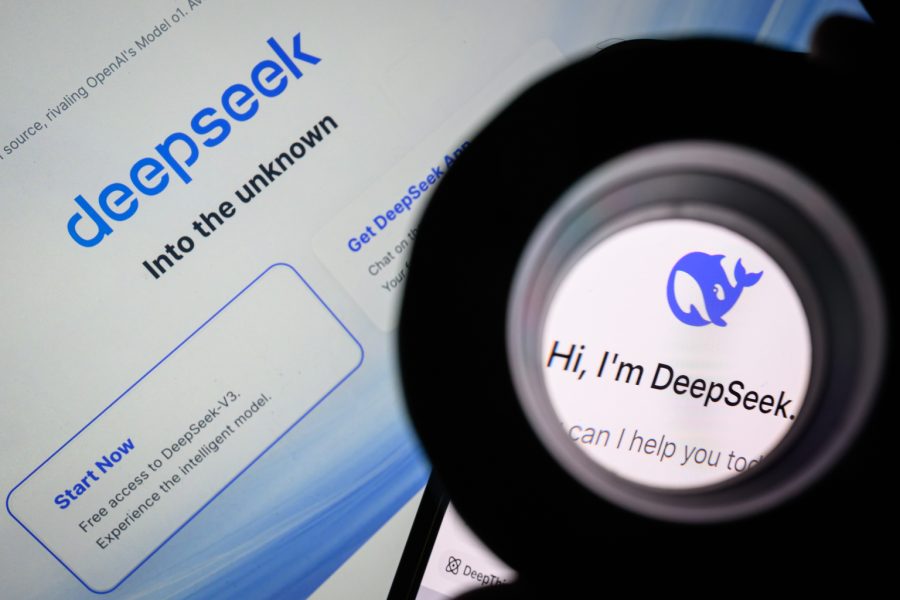
Chinese AI firm DeepSeek (DEEPSEEK) has not shown U.S. chipmakers its upcoming AI model for performance optimization, breaking away from standard industry practice ahead of a major model update, Reuters reported, citing people with knowledge of the matter.
However, DeepSeek, which is expected to unveil the new model called V4, granted early access to domestic suppliers, including Huawei Technologies, the report added.
AI developers usually share pre-release versions of major models with leading chipmakers like Nvidia (NVDA) and Advanced Micro Devices (AMD) to ensure their software works efficiently on widely used hardware. Previously, DeepSeek has worked closely with Nvidia’s technical staff, according to the report.
DeepSeek did not give access to Nvidia and AMD and gave Chinese chipmakers, including Huawei, a head start of several weeks to optimize the software for their processors, the report noted.
Nvidia, AMD, DeepSeek, and Huawei did not immediately respond to a request for comment from Seeking Alpha.
“The impact to Nvidia and AMD for general data accelerators is minimal – most enterprises are not running DeepSeek, which serves as a benchmarking model more than anything else,” said Ben Bajarin, CEO of research firm Creative Strategies. Bajarin noted that new AI coding tools are reducing the time it takes to make software run well on hardware “from months to weeks.”
The move is likely part of a larger strategy by the Chinese government “to try to keep U.S. hardware and models disadvantaged” in China, according to Bajarin.
Earlier this week it was reported that a Trump administration official told the news outlet that Seek’s latest AI model was trained on Nvidia’s advanced chip called Blackwell, using a cluster in mainland China. The move seems to violate U.S. export curbs.
DeepSeek could look to remove technical indicators revealing its use of U.S. AI chips and plans to publicly claim that it used Huawei’s chips to train its model, as per the U.S. official.
In December 2025, U.S. President Donald Trump approved the sale of some advanced AI chips, including the H200 GPUs, to China in exchange for a 25% fee. Trump issued a proclamation in January imposing the 25% tariff on certain high-end chips, including Nvidia’s H200 and Advanced Micro Devices’ (AMD) MI325X.
On Wednesday, Nvidia said that although the U.S. government approved limited shipments of H200 chips to China-based customers, the company has not yet generated any related revenue.
The H200 is the predecessor to Nvidia’s current flagship Blackwell chips and the upcoming Vera Rubin. The Trump Administration had previously allowed Nvidia to sell a less powerful GPU, the H20, to China.
Nvidia’s H20 and AMD’s MI308 chips are aimed at AI inference — the process where a trained model analyzes new, unseen data to make predictions, decisions, or generate content.
Demand for the MI308 was significant, with AMD noting that it generated $390M in sales of the chip in the fourth quarter of 2025.