As U.S. supermarkets struggle with higher import costs under the Trump administration’s tariffs, they’re leaning more heavily on another European staple: store-brand groceries, the Financial Times reported Sunday.
Private label foods, long a mainstay in European supermarkets, are gaining ground in the United States as shoppers trade down during the worst inflation surge in decades. Sales of store brands have grown more than 4% over the past year, far outpacing the roughly 1% increase seen by national brands, according to NielsenIQ data cited by the FT.
While private label makes up nearly 40% of grocery sales in Western Europe, it represents less than half that share in the U.S., leaving what analysts say is a more-than-$100 billion opportunity.
White-label bonanza
The industry’s growing scale will be on display at the upcoming Private Label Manufacturers Association show near Chicago, where major retailers including Walmart (WMT) and Kroger (KR) will meet with the contract manufacturers that produce most store brands. PLMA president Peggy Davies said interest in exhibiting is so strong that the group now has a waiting list, and she expects private label sales to reach a record $280 billion this year, the FT reported.
Store brands have surged in popularity as inflation has pushed shoppers to look for cheaper alternatives, and many have decided the lower-cost options work just as well. Retailers also earn higher margins on private label goods because they save on wholesale and marketing costs, while branded manufacturers face more pressure as consumers switch away. PepsiCo (PEP) Chief Executive Ramon Laguarta recently pointed to rising competition from store brands as one reason the company is focused on cutting expenses.
European invasion
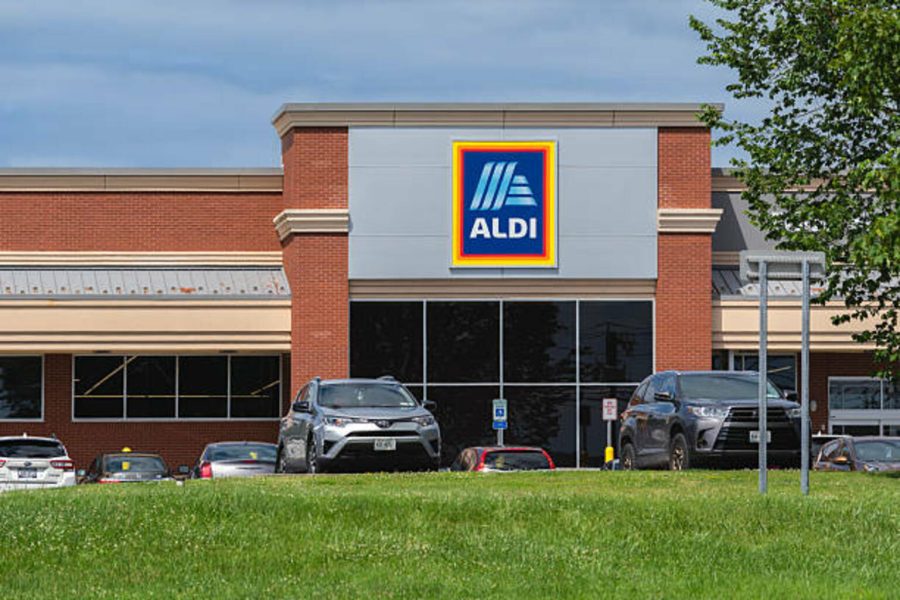
Discounters Aldi and Lidl, whose business models rely heavily on store brands, are accelerating their U.S. expansion. Aldi plans to open more than 200 stores this year and over 800 in the next five years; its own-label products make up around 90% of its range. Lidl aims to close the U.S.-Europe gap in private label adoption, noting that about 80% of its assortment is store-brand.
Aldi’s price advantage is clear on shelves: in the New York area, customers can choose between Aldi’s Summit Popz prebiotic soda and PepsiCo’s (PEP) similar Poppi cans, priced $1.49 and $1.99, respectively. Many shoppers say the cheaper option is equal or better quality.
Mainstream grocers also have massive store-brand operations. Costco’s (COST) Kirkland line now generates more than $80 billion a year, and Walmart (WMT) gets roughly a quarter of its U.S. revenue from private brands such as Great Value.
Walmart (WMT) has even added a premium tier, Bettergoods, echoing moves by European chains. Chief Financial Officer John David Rainey has said Walmart’s (WMT) store brands strengthen its negotiating leverage with big suppliers because it gives the retailer a fallback when brands resist lowering prices.
The private label boom depends on a vast network of more than 20,000 U.S. contract manufacturers, who executives say have plenty of room to expand production. As discount chains continue to open new stores and more Americans embrace store-brand staples, the U.S. grocery landscape is poised to look increasingly European.
As Lidl’s U.S. chief Joel Rampoldt put it, private label is central to its business, and as discounters grow, so does the market share of store brands.