Zoox (ZOOX) is moving quickly into a commercialization phase, highlighted by the public launch of its robotaxi service on the Las Vegas Strip and plans to scale production and expand to additional U.S. cities. Zoox (ZOOX) maintains that it is the only company with a true purpose-built robotaxi on public roads.
In Las Vegas, Zoox (ZOOX) has been named the official ride-hailing company of T-Mobile Arena, marking the first deal for the autonomous ride service company with a major sporting venue. The new service will include a dedicated pick-up and drop-off lane at the West VIP entrance. The deal has been called a transformative moment for both T-Mobile Arena and the future of transportation in Las Vegas.
Notably, Zoox (ZOOX) expects to start charging passengers for rides in Las Vegas in early 2026 and charge riders in the San Francisco Bay Area later in 2026.
Zoox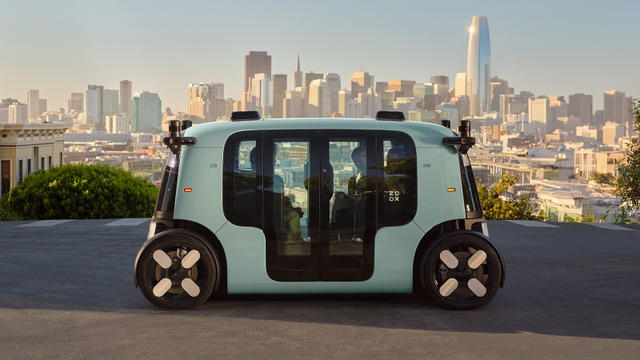
Zoox (ZOOX) has also expanded testing beyond its West Coast core into Washington, D.C., bringing its test footprint to eight cities, including Las Vegas, the Bay Area, Seattle, Austin, Miami, Los Angeles, Atlanta, and D.C. In Los Angeles specifically, Zoox announced plans to begin mapping and testing its vehicles on public roads as part of a broader California expansion.
As for next steps, Zoox (ZOOX) is expected to scale up dramatically, with plans to substantially increase its fleet even further and open a new production site in the Bay Area and move beyond the current few dozen vehicles operating across select U.S. cities. The expectation is that the Las Vegas Strip deployment will serve as a major public showcase of Zoox’s (ZOOX) unique symmetric, bidirectional, electric robotaxi design.
Amazon (AMZN) acquired Zoox (ZOOX) in 2020 for a reported price of $1.2 billion to $1.3 billion. Zoox (ZOOX) operates within the Seattle-based e-commerce giant as a standalone subsidiary under its own leadership. Looking ahead, Amazon (AMZN) is expected to use Zoox’s (ZOOX) autonomous stack and advanced technology to increase automation in its fulfillment and delivery network, particularly for last‑mile routes, which could materially reduce shipping costs if deployed at scale.