
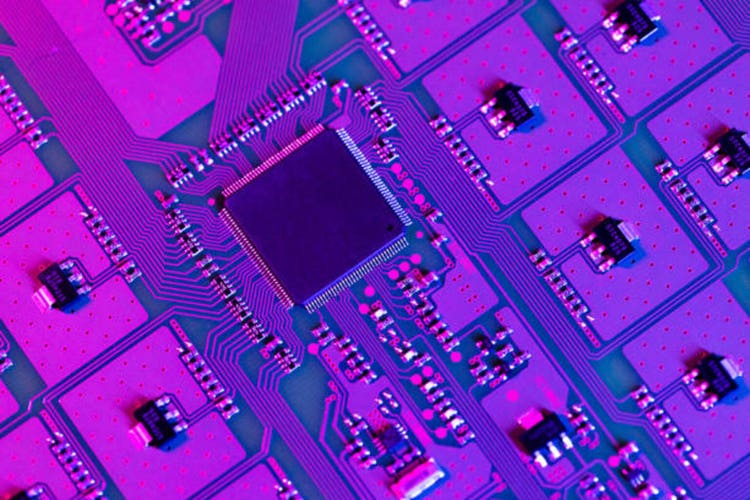
Apple (NASDAQ:AAPL), Qualcomm (NASDAQ:QCOM) and MediaTek are likely to launch 2nm system-on-a-chips in the latter part of 2026, with the new processors likely built by Taiwan Semiconductor (NYSE:TSM), Counterpoint Research said.
There has been accelerated adoption of 3nm and 2nm nodes, due in part to stronger performance and higher efficiencies, as companies put more artificial intelligence capabilities on devices, Counterpoint said. And Apple is expected to be a major player, with more than 80% of its product portfolio moving to 3nm node this year, Counterpoint added.
“The current demand for complex on-device AI capabilities is a significant accelerator for moving to smaller, more powerful, and more efficient nodes,” Counterpoint senior analyst Parv Sharma said in a statement. “This has also led to an increase in the overall cost of the SoC due to higher wafer price and rising semi content in smartphone [system-on-a-chips]. The 3nm and 2nm nodes will hit a key milestone with one-third smartphone [system-on-a-chips] expected to feature them by 2026.”
Sharma continued: “TSMC will start the tape out process for the 2nm node in H2 2025 and mass production in 2026. Apple, Qualcomm and MediaTek are expected to launch their first wave of flagship SoCs in late 2026.”
Taiwan Semiconductor had roughly two-thirds of the semiconductor foundry market in the fourth-quarter of 2024, according to data from TrendForce. And given its technological prowess, it is expected to keep its stronghold as the chip industry continues to focus more on advanced nodes, Counterpoint research director Brady Wang said.
“In 2025, TSMC will likely lead total smartphone SoC shipments with an 87% share in the 5nm and below (3nm and 2nm) nodes and is expected to grow to 89% by [the] end of 2028,” Wang explained.
Major customers such as Apple, Qualcomm, and MediaTek rely on Taiwan Semiconductor, which may make it difficult for Samsung’s (OTCPK:SSNLF) foundry to compete in the leading edge. This is due in part to past yield issues, which has delayed the adoption of 3nm in smartphones, Wang added.
More on Apple, Qualcomm, and Taiwan Semiconductor
- Qualcomm: From Modems To On-Device Intelligence – Time For Reassessment
- Qualcomm’s Dual Model: Disruptive Innovation And Robust Profitability
- Apple: Buying More As Fundamentals Deteriorate, Blue Chip Status Remains (Rating Upgrade)
- Apple met with former OpenAI CTO Murati to discuss deal for new company: report
- Apple negotiates with European Commission in attempt to avoid escalating fines: report