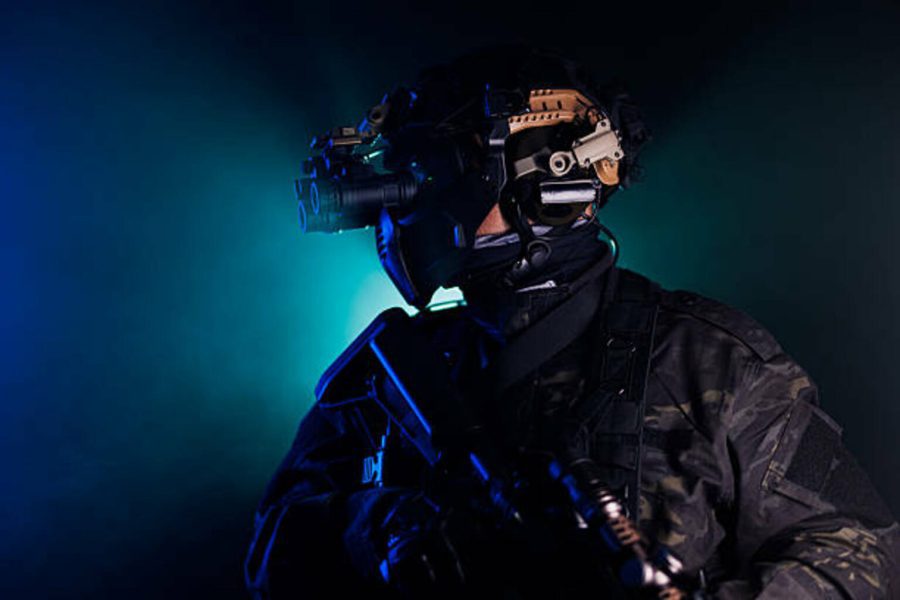
The U.S. Army has selected two industry teams — one led by Anduril Industries in partnership with Meta Platforms (NASDAQ:META), and another headed by Rivet Industries — to develop competing prototypes of a new battlefield headset.
Rivet disclosed its award at $195 million, while Anduril said it received $159 million. The Army didn’t provide a total program value or indicate how many systems might ultimately be procured.
The effort builds on the Integrated Visual Augmentation System (IVAS), a Microsoft-led (MSFT) program that once carried a projected 10-year price tag of more than $20 billion.
After years of delays and $1.36 billion in sunk costs, including hundreds of prototypes, Anduril assumed management of IVAS earlier this year. The rebranded program, now called Soldier Borne Mission Command (SBMC), emphasizes modularity, software-driven upgrades and lessons learned from real-world conflicts.
According to the Army, SBMC will feature an “open, upgradeable” architecture informed by more than 260,000 hours of soldier feedback from IVAS testing. Anduril said its version will integrate its Lattice software and draw on partners including Meta (NASDAQ:META), Oakley Standard Issue, Qualcomm (NASDAQ:QCOM) and Gentex (NASDAQ:GNTX).
Meta’s (NASDAQ:META) participation marks a shift in Silicon Valley’s stance toward military contracts. The company only recently amended its acceptable use policies to permit its AI tools in U.S. defense projects. Chief Technology Officer Andrew Bosworth has said attitudes in the tech sector are changing, with greater willingness to engage in national security work.
The contracts were issued under the Pentagon’s “Other Transaction Authority,” a streamlined mechanism designed to accelerate prototype delivery and counter longstanding concerns about slow acquisition timelines.
The Army’s decision underscores Washington’s push to bring newer tech players into defense projects traditionally dominated by established contractors. President Donald Trump has been a vocal advocate of closer ties between the military and Silicon Valley to advance next-generation weapons systems.