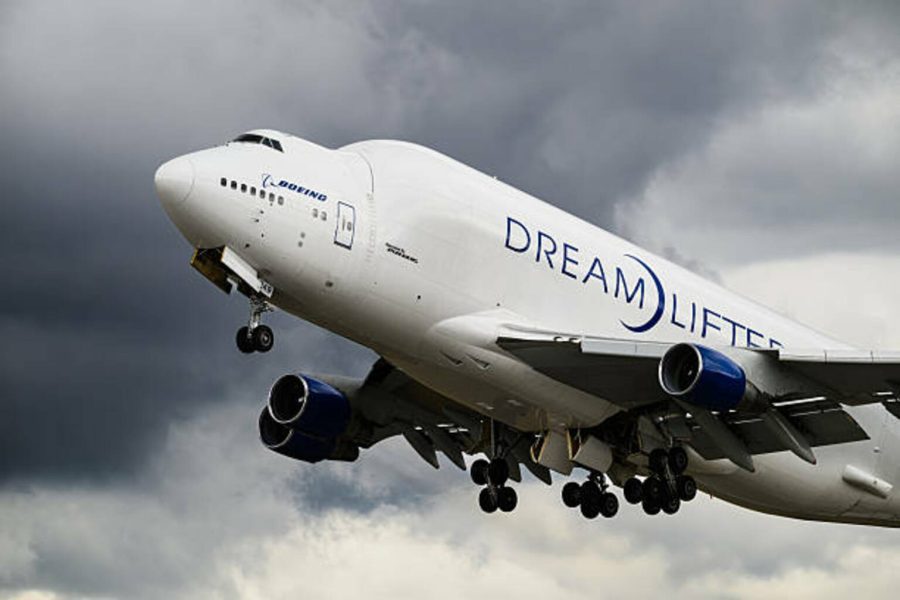
Boeing’s (NYSE:BA) 787 Dreamliner output appears to be stabilizing below its stated production goals, according to an analysis from UBS Evidence Lab, which tracks activity using data from Boeing’s Dreamlifter cargo fleet.
Research analyst Gavin Parsons reported in an Oct. 17 note that Dreamlifter flights (used to transport large 787 fuselage sections to Boeing’s (NYSE:BA) Charleston, South Carolina, assembly line) fell 5% year over year in the 30 days ending October 10. The trend implies an underlying production rate of about 5.6 aircraft a month, compared with 6.5 a month a week earlier.
While Boeing (BA) hasn’t yet reached the seven-a-month level this year, Dreamlifter activity has remained close to six a month since March, suggesting the company may still be drawing down existing inventory. Boeing (BA) recently outlined plans to lift 787 output from seven to eight a month, with a further increase to 10 a month expected next year.
UBS noted that Dreamlifter flight volumes have at times exceeded calculated production rates, indicating that Boeing (BA) likely continues to manage a “large inventory balance.” The firm nonetheless described the pace as a “sharp ramp” amid an improving supply chain environment.
Data from Cirium and Planespotters show three 787 deliveries so far in October. UBS models a seven-a-month build rate in the third quarter, rising to eight a month by early 2026 and 10 a month by early 2027. Boeing (BA) delivered 24 aircraft in the third quarter, including an estimated eight from inventory.
UBS estimates Boeing (BA) ended the second quarter with about 30 Dreamliners in storage and expects that number to fall to the mid-20s by year-end. The brokerage projects 85 total 787 deliveries for 2025, slightly above Boeing’s (BA) guidance of around 80, and sees production gradually increasing to 16 a month by 2033 in response to sustained demand for widebody jets.