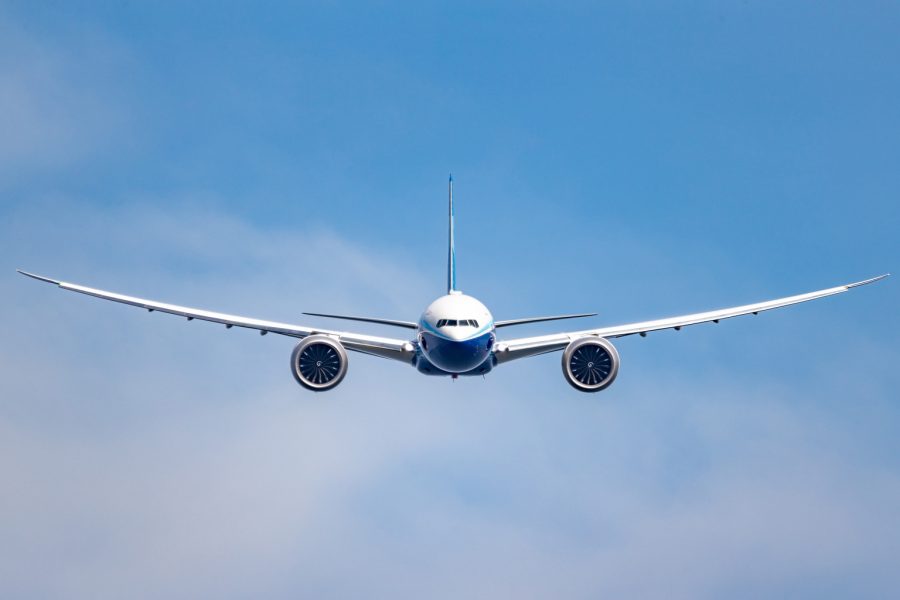
Boeing (BA) and General Electric (GE) have identified a possible durability concern involving a seal on the GE9X engine that powers the 777X, Bloomberg News reported Monday, citing people familiar with the matter.
The issue emerged during a recent inspection and could ultimately require a redesigned seal, with updates carried out during scheduled maintenance visits rather than immediately. Boeing (BA) executives stressed on the company’s Jan. 27 earnings call that the finding is not expected to add new delays to the long-delayed 777X program. The GE9X engine received certification in 2020.
GE Aerospace (GE) said it is still assessing whether any corrective action will be needed. A spokesperson said the company has launched on-wing inspections while it analyzes the issue and determines next steps, following its safety and quality processes.
Engine durability has become a growing concern for airlines, particularly those operating in hot and dusty environments such as the Middle East, where some carriers have faced earlier-than-expected maintenance visits on modern turbofans. Emirates, the largest 777X customer, has publicly signaled it has little appetite for early reliability problems.
The seal issue comes as Boeing (BA) remains under close watch from customers and investors while it completes flight testing with U.S. regulators. The aircraft, designed as a twin-engine successor to the 747, is now slated for first deliveries in 2027.
Boeing (BA) previously took a $4.9 billion charge tied to certification delays, heightening sensitivity to any further schedule risk. Chief Executive Kelly Ortberg said the company continues to make progress in flight testing and does not expect the engine issue to affect the current delivery timeline.