Wirestock/iStock Editorial via Getty Images
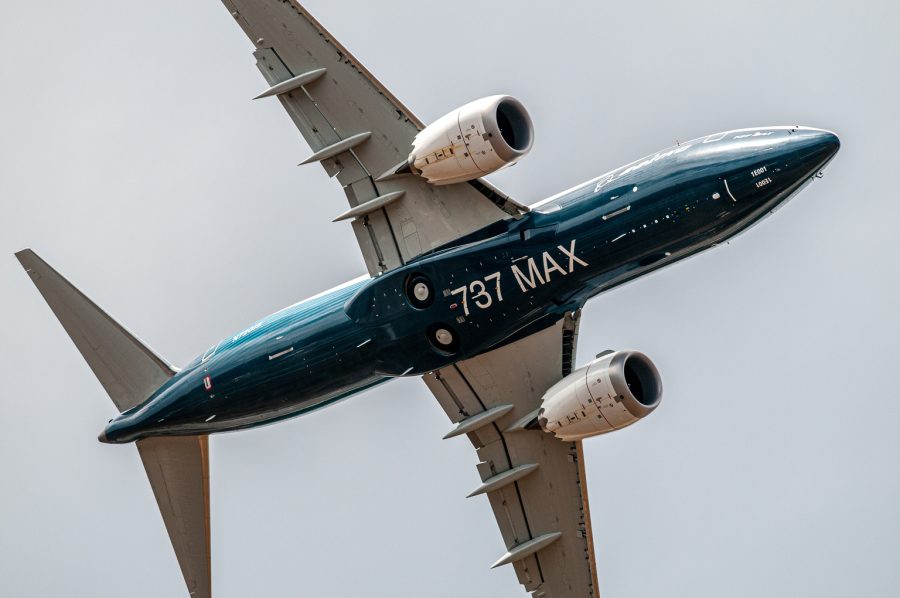
Boeing (NYSE:BA) is nearing a critical production milestone for its 737 aircraft, a development that suggests the company is regaining its footing after a mid-air incident last year cast a spotlight on manufacturing issues, Bloomberg News reported Wednesday, citing the aviation giant’s customers.
John Plueger, chief executive of Air Lease (NYSE:AL), a major aircraft lessor, said Boeing (NYSE:BA) is now preparing its final assembly lines to produce 38 units of the single-aisle 737 each month, which is the upper limit currently permitted by the Federal Aviation Administration.
Meanwhile, Spirit AeroSystems (NYSE:SPR), a key supplier based in Wichita, Kansas, is delivering around nine fuselages weekly to Boeing’s Renton, Washington facility, according to an unnamed customer. That translates to approximately 36 jets a month, indicating Boeing (BA) is testing its lines before committing fully to the 38-per-month pace.
This progress represents a significant step for Boeing (BA) as it works to restore confidence among customers, investors and regulators after a string of production setbacks and safety incidents. The alarming panel blowout on a 737 Max flight early last year led to intense scrutiny of its safety procedures. The FAA has imposed a cap on 737 production levels until Boeing (BA) demonstrates robust quality assurance and a stable supply chain.
Boeing (BA) didn’t respond to requests for comment on its production targets, and a spokesperson for Spirit AeroSystems was not immediately available, Bloomberg News reported.
Kelly Ortberg, chief executive of Boeing (BA), previously outlined plans to hit a steady output of 38 jets a month by mid-year. He cited the importance of holding at that level for a period to prevent overloading suppliers or internal operations. If the plan succeeds, Boeing (BA) will seek FAA approval later in the year to raise output to 42 jets monthly, with aspirations for incremental increases every six months thereafter.
Ortberg said during an April earnings call that scaling up 737 Max output remains central to improving Boeing’s (BA) cash flow. At that time, monthly production was still in the low 30s.
According to Plueger, Air Lease (NYSE:AL) has received its 737 Max aircraft on schedule since Boeing (BA) updated its production calendar last November, and the same applies to its 787 Dreamliner deliveries. It marks an improvement from the persistent delays that have affected both Boeing (BA) and rival Airbus (OTCPK:EADSF) (OTCPK:EADSY) in recent years. However, he cautioned that the company still faces headwinds, particularly with the risk of new international trade barriers in response to tariffs implemented by President Trump.
Plueger added that while Boeing (BA) has made progress, it must continue delivering aircraft reliably and at a high level of quality to fully restore its reputation.
In the wake of last year’s Alaska Airlines incident, Boeing (BA) has enacted several reforms aimed at improving safety and production practices. These include enhanced protections for whistleblowers, improved accountability for misplaced tools that can pose hazards during assembly, and increased use of artificial intelligence to analyze operational data for safety risks—such as potential runway overrun events.
These initiatives build on reforms first introduced after two deadly 737 Max crashes in 2018 and 2019, and reflect an ongoing commitment to addressing the company’s longstanding quality control issues, according to Don Ruhmann, Boeing’s (BA) newly appointed chief aerospace safety officer.