Boeing’s (BA) commercial aircraft production appeared to fall short of company targets in December, with key supply-chain indicators pointing to slower output for both the 737 and 787 programs, according to a Jan. 5 note from BNP Paribas.
Matthew Akers, an analyst at the bank, estimated that shipments of 737 fuselages from Wichita, Kansas, to Boeing’s (BA) final assembly lines in Everett, Washington, slowed to the low-30s in December, well below Boeing’s (BA) stated production target of 42 aircraft a month. The fuselages are transported by rail from Boeing’s (BA) former Spirit AeroSystems facility and typically translate into completed aircraft deliveries several weeks later.
While fuselage counts in November were similarly subdued, Akers said some of the weakness may reflect holiday-related seasonality, noting that aircraft deliveries in January have historically declined sequentially from year-end levels. Still, the data suggest near-term production momentum remains constrained.
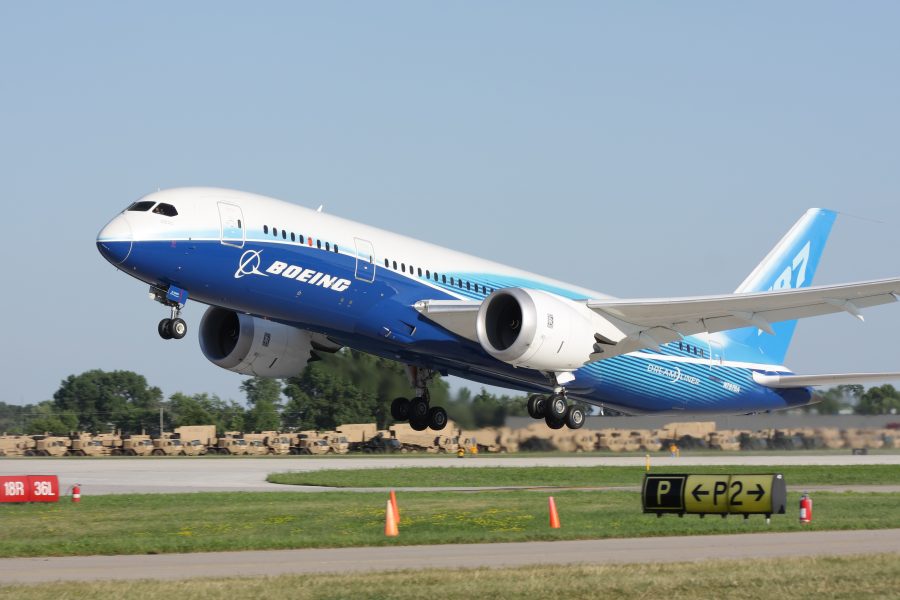
Separate tracking of Boeing’s (BA) widebody program also points to output below plan. By monitoring activity from Boeing’s (BA) fleet of modified Dreamlifter cargo aircraft, which transport major components for the 787 program, BNP Paribas estimates December production ran at roughly six aircraft per month, compared with Boeing’s (BA) target rate of seven.
“We count about 70 Dreamlifter flights in December, which we estimate implies 787 production near six per month versus Boeing’s target,” Akers wrote.
Despite the slower production signals at Boeing (BA), BNP Paribas said it sees improving conditions for major aerospace suppliers as inventory destocking eases across the industry. The firm maintains Outperform ratings on Howmet Aerospace (HWM) and RTX (RTX), but remains Underperform on Boeing (BA), citing concerns about downside risk to the company’s cash flow expectations.
The analysis adds to investor scrutiny of Boeing’s (BA) manufacturing recovery, as the company works to stabilize production rates following quality issues and supply-chain disruptions.