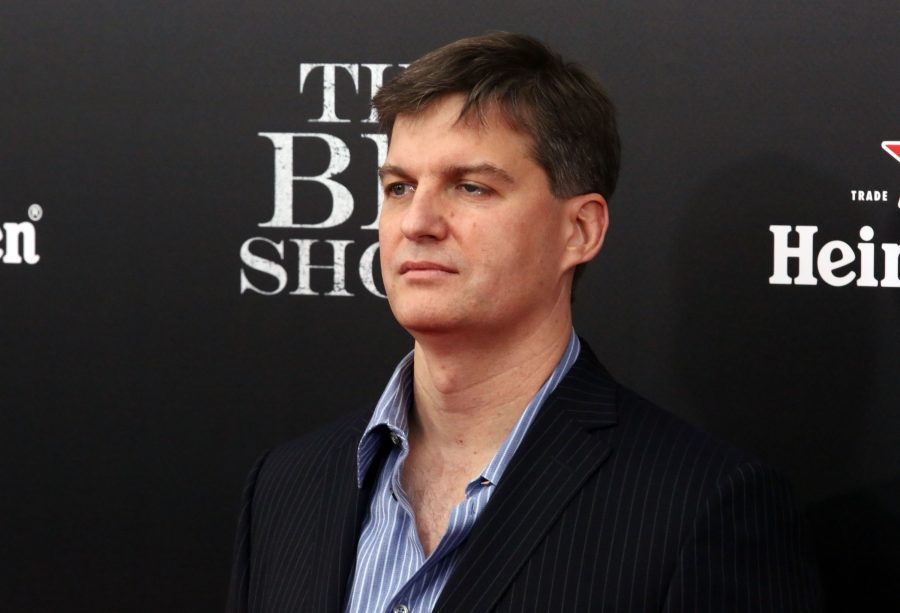
Famed investor Michael Burry on Saturday ignited a fresh debate over the sustainability of the artificial-intelligence boom, questioning whether tech giants’ massive data center spending can continue without damaging balance sheets and earnings.
Burry, known for his prescient bets ahead of the subprime mortgage crisis depicted in “The Big Short,” directed pointed criticism at major technology and industrial names.
“A question I have for (ORCL), (GOOG), (META), (MSFT), (AMZN), (NVDA), (CAT), and all the rest, ‘When does the spending for AI data center buildout actually end?’” Burry wrote on X. “It is consuming all your cash flow, you are borrowing, you are financing in ways you never have, apparently because it is so urgent, because it scales? But if it scales, when does it end?”
He added: “Now you are engaging in accounting tricks to hide expense, to protect earnings, as the impact is so severe. You will be tortuously adjusting your earnings in a new and sinister ways. When does it end?”
Arguing over depreciation accounting
The comments drew a detailed rebuttal from Aakash Gupta, a technology newsletter writer with more than 200,000 subscribers, who suggested Burry’s argument centers on depreciation accounting and the pace of capital expenditures.
“Burry is mass-publishing the accounting case for his put options on Nvidia and Palantir while the rest of the market is still debating whether the capex cycle has legs,” Gupta wrote.
Gupta laid out what he described as the financial backdrop: “The Big Four hyperscalers just guided $650-700 billion in combined 2026 capex, a 60%+ increase from the $381 billion they spent in 2025.” He noted that “Amazon alone committed $200 billion, so far above the $146 billion consensus that the stock lost $450 billion in market cap over nine straight sessions.”
According to Gupta, Burry’s focus is what he calls a “depreciation trick.” He wrote that Nvidia’s (NVDA) current GPUs could become economically outdated within a few years, yet are being depreciated over longer periods. “Burry estimates this gap understates depreciation by $176 billion between 2026 and 2028, inflating reported operating income by 20%+ at companies like Oracle and Meta,” Gupta said. “That’s the ‘accounting tricks’ he’s referencing in the tweet. He did the math.”
Gupta also pointed to balance-sheet strain.
“Amazon is projected to go negative FCF in 2026, somewhere between -$17 billion (Morgan Stanley) and -$28 billion (BofA). Alphabet’s free cash flow is expected to collapse 90%, from $73.3 billion to $8.2 billion,” he wrote, adding that major tech firms “raised $108 billion in bonds in 2025 alone” and that “JP Morgan projects $1.5 trillion in tech debt issuance ahead.”
Still, Gupta cautioned investors about relying too heavily on Burry’s timing.
“The pattern with Burry is always the same: the structural analysis is correct, the timing is wrong, and the market can stay irrational long enough to wipe out the trade before it pays,” he wrote. “Whether it pays depends on something Burry has never been good at: timing the moment when the music stops.”
Burry responds to criticism
Burry pushed back forcefully against that characterization, defending both his record and his market timing.
“Well, I have called just about everything significant that has happened the last 26 years. It’s hard to say I’ve never had the timing right,” he wrote.
He cited a series of past trades and macro calls: “I was short Amazon at the top in 2000. I went way long small cap value in late 2000. I bought AAPL in 1998 and then again in 2002… In 2004, I got into oil before a big run. I bought gold in 2005 and still 20 years later… In summer 2005, I figured I was buying 5 years swaps on something would print within 2, and it did.”
He continued: “In 2008, October, I told my investors it was time to buy. More stocks bottomed then than in March 2009… Early 2020, I entered 2020 very short. Which worked. During early COVID I loaded up on stocks and had nearly a 100% year for the fund.”
Addressing more recent bets, Burry wrote: “2020s, I shorted Tesla, but these were trades, and it was volatile. I did not lose money overall shorting Tesla. Had some really big quick wins. Plus Tesla is only worth about $120.”
He acknowledged imperfections: “I am not perfect, I did not hold AAPL or NVDA long enough… but I would put the calls I’ve made over these decades up against anyone.”
Separately, Burry drew a historical parallel between today’s AI enthusiasm and the radio boom of the 1920s.
“In the 1920s there was radio mania focused mostly on one stock, RCA,” he wrote. “The stock fell peak to trough about 98% during early 1930s, and yet radio’s growth never slowed for many more decades. Even if you predicted a half century of radio dominance, you would have lost money on RCA. $NVDA”
The exchange highlights a central tension in markets: whether massive AI infrastructure spending represents the foundation of a durable technological shift. or the kind of capital cycle excess that precedes painful corrections.
For now, investors are left weighing Burry’s warning against the momentum of one of the most powerful investment themes of the decade.