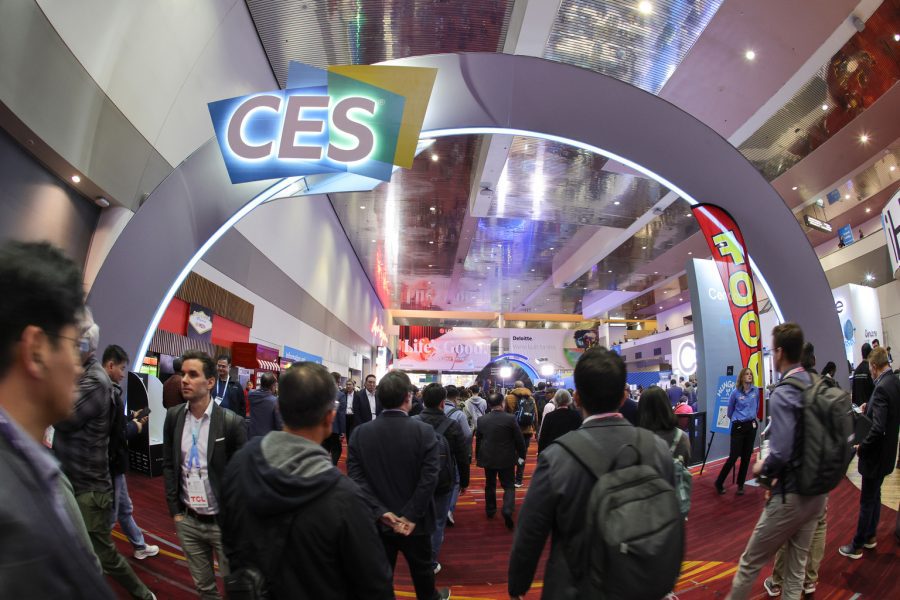
What happens in Vegas stays in Vegas, except at CES… hopefully. The world’s biggest tech expo, known as the Consumer Electronics Show, is kicking into high gear with more than 130,000 people in attendance. Over 4,000 exhibitors are optimistic that the technology displayed at the event will spread into the broader market, and with many on the hunt for innovations of the future, there’s a good chance that it will.
Snapshot: AI is everywhere, ranging from Nvidia’s (NVDA) Alpamayo, the world’s first “thinking” model for autonomous driving, to Caterpillar’s (CAT) evolution “from dirt to data,” with a focus on autonomous machines and industrial AI. Don’t forget AMD’s (AMD) Zen 5–powered Ryzen AI Embedded processors and Intel’s (INTC) next-gen Core Ultra Series 3. Meanwhile, Samsung’s (SSNLF) Galaxy Z TriFold got a close-up in a new video, transforming from smartphone to tablet in seconds for multitasking or even as a mini workstation
There were also plenty of robots and humanoids to go around. Grabbing the spotlight was LG’s CLOiD, which can fold laundry and unload dishwashers, as well as the new Atlas humanoid by Boston Dynamics, which can lift up to 110 lbs and will be deployed at parent Hyundai’s car factories from 2028. Other interesting developments included Lego’s Smart Bricks, which will contain chips and react to movement and sound, and surprising gadgets like the Allergen Alert Mini Lab that can quickly test food for gluten and allergens.
More companies with a presence at the show: Abbott (ABT), Amazon (AMZN), Deere (DE), Dell (DELL), Garmin (GRMN), Panasonic (PCRFY), Qualcomm (QCOM), Siemens (SIEGY) and Sony (SONY). The U.S. consumer technology industry is expected to grow 3.7% Y/Y to reach $565B in revenue in 2026, according to the Consumer Technology Association.