China tightened its rare earth export rules on Thursday, which could create issues for an array of companies involved in the semiconductor supply chain, as these elements are crucial in the manufacturing of many high-tech products.
“The most direct impact should fall on wafer fabrication and manufacturing equipment,” said Seeking Alpha analyst Semiconductor Analyst. “Leading foundry TSMC (NYSE:TSM) is exposed on both fronts, though I’d argue it’s less directly targeted. Memory manufacturers face meaningful supply chain risks. Given that memory is likely the key bottleneck for China’s AI ambitions if U.S. equipment remains restricted, these measures may also be designed to secure negotiating leverage over memory access.”
TSMC shares were down 1.8% by afternoon trading on Thursday. Memory makers Micron Technology (NASDAQ:MU), Western Digital (NASDAQ:WDC) and Seagate Technology (NASDAQ:STX) had declined by 3%, 1.3% and 1.7%, respectively.
Meanwhile, semiconductor manufacturing equipment makers were also dropping. ASML (NASDAQ:ASML) inched down 1%, Lam Research (NASDAQ:LRCX) had dipped 1.2% and KLA (NASDAQ:KLAC) had declined 2%.
“For semiconductor equipment companies, supply chains are highly complex, and it remains to be seen how fast they can adapt,” Semiconductor Analyst noted.
Wafer fabrication companies, including Intel (NASDAQ:INTC) and GlobalFoundries (NASDAQ:GFS) were down 0.3% and 2.4%, respectively.
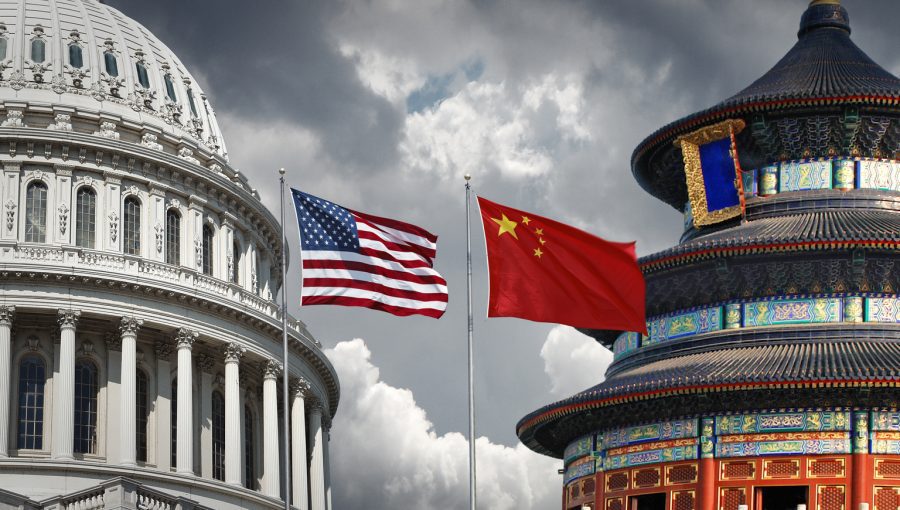
The new rare earth export rules are yet another escalation in the ongoing trade war between the U.S. and China and the battle for artificial intelligence supremacy.
“This marks another chapter in the geopolitical trade war,” according to Semiconductor Analyst. “The new measures go beyond threatening material shortages: China is now leveraging its intellectual property across the refining and processing chain to extend extraterritorial influence, mirroring the way the U.S. has wielded control over semiconductor technologies.”
The announcement from China’s Ministry of Commerce clarified and expanded sweeping controls announced in April, which had caused massive shortages around the world before a series of deals with Europe and the U.S. resumed shipments. It’s also apparent that licenses will likely be denied to arms makers and some semiconductor companies. China produces about 90% of the world’s rare-earth magnets.
On the flip side, U.S. companies that produce rare earth minerals were on the rise Thursday. USA Rare Earth (NASDAQ:USAR) shares shot up 14%, and MP Materials (NYSE:MP) edged up 2.7%.
U.S. President Trump made moves this summer to at least partially offset China’s near monopoly on rare earth materials. In July, MP Materials (NYSE:MP) announced a public-private partnership with the U.S. Department of Defense to accelerate the build-out of an end-to-end U.S. rare earth magnet supply chain and reduce dependency on foreign sources.
The Pentagon became MP Materials’ largest shareholder after agreeing to buy $400M of a newly created class of preferred shares that are convertible into common stock.