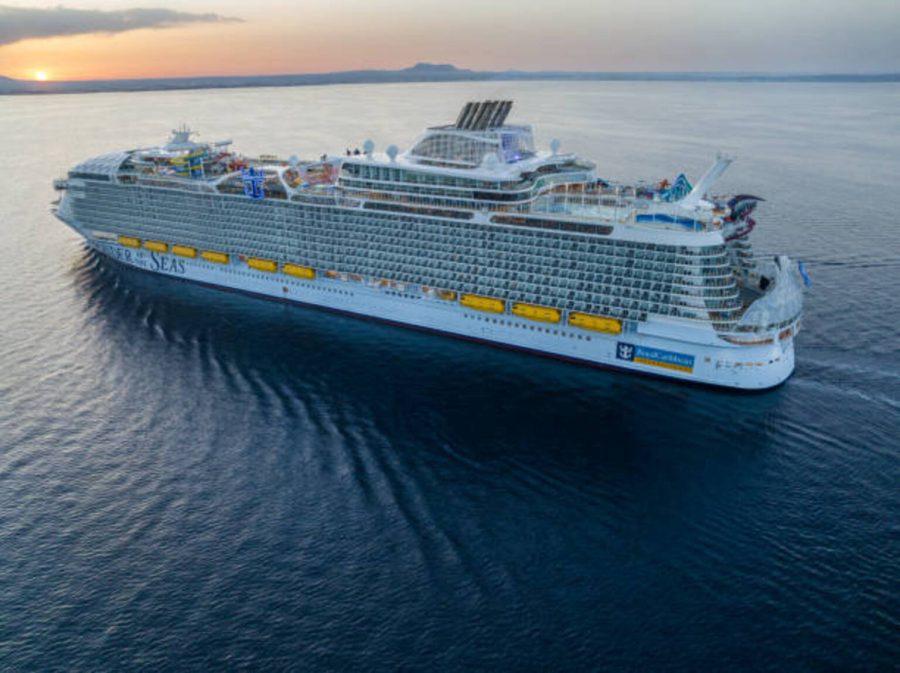
The cruise sector is in the midst of a multi-day losing streak as the recent spike in fuel prices threatens the industry’s bottom line.
Similar to the airline industry, fuel is one of the cruise industry’s largest—and most volatile—expenses. According to industry statistics, a single ship can consume as much as 250 tons of fuel daily at a cost of more than $100K per day.
To illustrate the exposure the industry has to fuel costs, for the fourth quarter, Royal Caribbean (RCL) consumed 439K metric tons of fuel at a cost of $667 per metric ton (net of hedging). For all of 2026, the company anticipates it will use 1.76M metric tons of fuel at a cost of $1.173B. This, however, is before the recent 30% spike in fuel prices over the past week.
Under prior conditions, Royal Caribbean forecasted 60% of fuel was hedged via swaps at $474 per metric ton. The remaining 40%, however, remains vulnerable to market fluctuations (either up or down). Using 2026 forecasts, if the price of fuel remains high, 704K metric tons of fuel could be subject to a ~30% price increase (~$867 per metric ton) at a cost that could exceed $600M.
Of course, fuel prices will most likely moderate and could go below $474/metric ton. But the knee-jerk reaction to the spike in oil is having a meaningful impact on the current share price of the major cruise operators.
Accordingly, shares remain underwater, with Norwegian Cruise Lines (NCLH) sustaining the heaviest losses, down more than 23% as a result of a 6-day losing streak.