Faced with increased capacity in the Caribbean that will lead to pricing pressures for the major cruise operators, Goldman Sachs’ Travel and Leisure analyst team led by Lizzie Dove sees the first half of 2026 as a more challenging period for the industry.
“Based on our industry channel checks, pricing and survey data, and bottom-up industry analysis, we expect H1 net yield growth to be pressured across the industry before ramping up in H2,” Dove and team said in their note to clients.
This is largely attributed to capacity growth in the Caribbean, expected to increase another 9% in 2026 as a result of new ships launching and repositioning into the region. This supply growth is not new, Dove says, as Caribbean capacity is up 50% since 2019, and has so far been absorbed well given the increase in cruise penetration and new-to-cruise passengers who favor closer to home and shorter duration itineraries.
“What appears to be different this time is that much of the growth is weighted to one company, with Norwegian Cruise Lines growing its Caribbean capacity 40% next year – an unusually large number to be absorbed in one year,” Dove writes.
With that type of growth, Norwegian (NCLH) will need more aggressive pricing to fill ships until the company launches its megaships to compete with Royal Caribbean (RCL) and Carnival (CCL) and fully scales its Great Stirrup Cay private island.
As such, Goldman lowers its 2026/2027 estimates and downgrades Norwegian Cruise Line Holdings (NCLH) to Neutral from Buy to reflect “a more balanced risk-reward profile pending further proof points.”
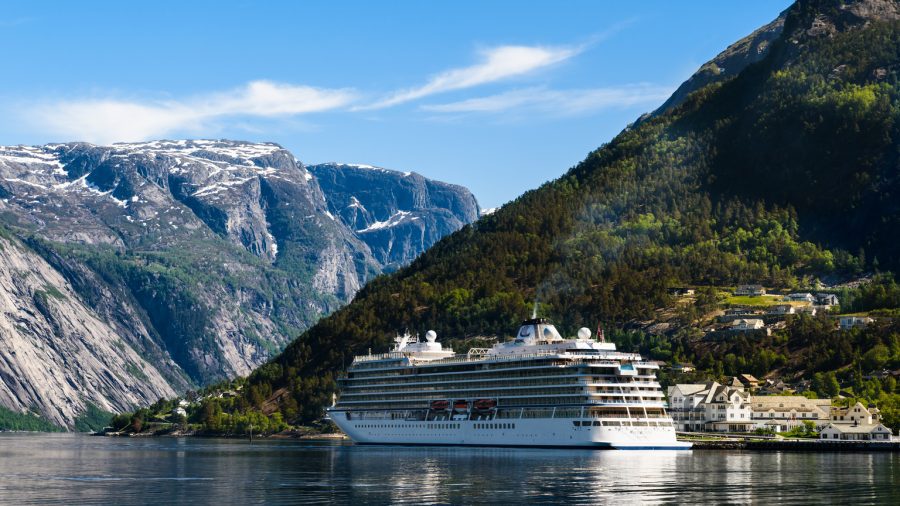
But while Royal Caribbean (RCL), Carnival (CCL) and Norwegian (NCLH) are beefing up their Caribbean fleet, Viking Holdings (VIK) is amplifying its “differentiated geographic exposure and higher-income demographic,” both of which have helped the company offset the choppier broader cruise trend.
Given Viking’s (VIK) low-single digit exposure to the saturated Caribbean market and acceleration in its 2026 pricing curve, Dove and team upgrade Viking (VIK) to Buy from Neutral.
Dove’s team believes that Viking’s (VIK) pricing power and shift into “more exotic itineraries is underappreciated,” while Wall Street is also over-estimating cost growth.
“Future potential capital return program could double free cash flow, share price, and EPS growth assuming leverage remains at 1.5x,” the team says, raising its estimates across the board and price target to $78 from $66.
Goldman maintains a Buy rating for both Royal Caribbean (RCL) and Carnival (CCL), both of which have a significant presence in the Caribbean but with a “competitive moat” that is anchored by their newbuild pipelines and private island exposure.
For Royal Caribbean (RCL), investors can expect some volatility in the near-term as estimates are reset for headwinds in the first half of 2026 and Caribbean promotion pressure peaks. But RCL will be the “structural winner in the long term with CocoCay Mexico and a solid balance sheet to drive further upside to free cash flow and EPS growth.
While Carnival (CCL) is the least affected by Caribbean pressure given its more diverse deployment mix, the company also caters to a more price-sensitive consumer, and a slower European recovery will have an outsized impact given that Carnival (CCL) has the highest exposure to Europe.
The rating change to Viking (VIK) is giving the stock a boost on Tuesday, up 2% with a new all-time high, while Norwegian (NCLH) stock is down 1.6%. Royal Caribbean (RCL) and Carnival Corp (CCL) shares are also lower, trading with a loss of 1% and 2%, respectively.