The U.S. airline sector has been rocked by disruption caused by the government shutdown that led to a shortage of air traffic controllers and mandated operational reductions issued by the Federal Aviation Administration. The FAA required airlines to cut flights by up to 10% at major airports, later adjusted to 6%, to maintain safety in the national airspace due to an unpredictable level of staffing and controller absences.
Deutsche Bank analyst Michael Linenberg broke down the flight cancellation scorecard across the sector. Based on the firm’s analysis of available flight data over the past seven days, it was estimated that 11,000 out of 167,000 US airline flights (~6.5% of the total) have been canceled since FAA flight reductions were implemented on November 7.
Linenberg said what is most notable is how well low-utilization, low-frequency carriers fared, particularly Allegiant (ALGT) and Sun Country (SNCY). “Furthermore, the regional airlines bore the brunt of the cancellations as their major airline partners sought to minimize passenger inconvenience and revenue impact from the flight cuts,” he added.
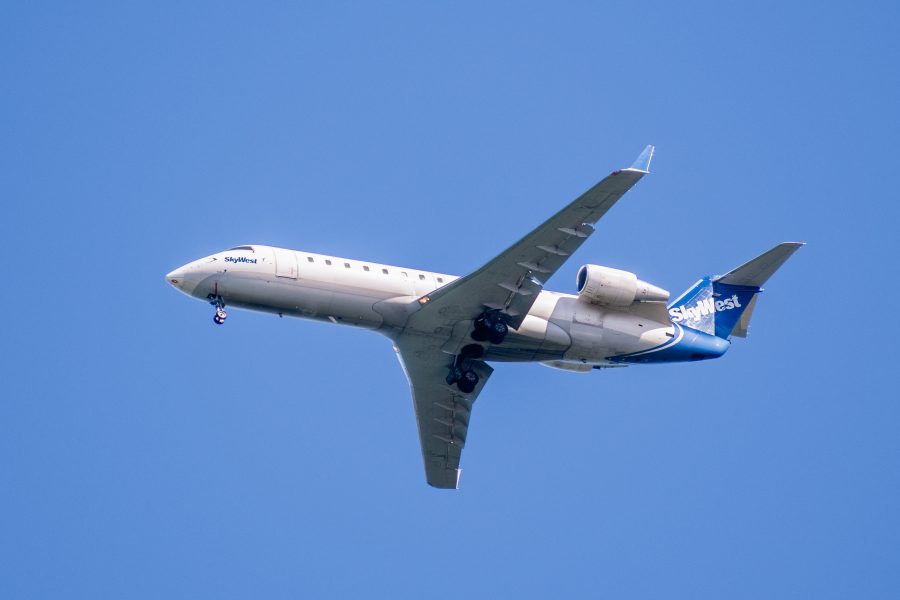
On a percentage basis, SkyWest (SKYW), which partners with Alaska Airlines (ALK), American Airlines (AAL), Delta Air (DAL), and United Airlines (UAL), incurred the most cancellations, estimated by Deutsche Bank at 11% of its flights.
“Comparing the largest airline brands (which includes their regional partners), we estimate that over the past seven days, Delta and American canceled approximately 2,900 and 2,800 flights, respectively, followed by United’s 2,400 flights, Southwest’s 1,300 flights, and Alaska and Hawaiian’s 550 flights. Lastly, we believe the worst is behind us based on the number of canceled flights from the past two days (just under 4% of total flights),” updated Linenberg.
Analysts with Jefferies observed that the telegraphed nature of the flight reductions helps airline companies save on additional costs, as opposed to flights canceled suddenly due to weather or mechanical issues.
On a year-to-date basis, Mesa Airlines (MESA) has the best share price return in the U.S. airline sector, with a 32% swing higher. American Airlines (AAL) trades with the lowest forward price-to-earnings ratio. Delta Air Lines (DAL) has the highest Seeking Alpha Quant score.
Airline stocks: American Airlines (AAL), Delta Air Lines (DAL), Southwest Airlines (LUV), United Airlines (UAL), JetBlue Airways (JBLU), Alaska Air Group (ALK), Allegiant Travel (ALGT), Spirit Airlines (OTC:SAVEQ), Mesa Airlines (MESA), SkyWest (SKYW), Sun Country Airlines (SNCY), and Frontier Group (ULCC).