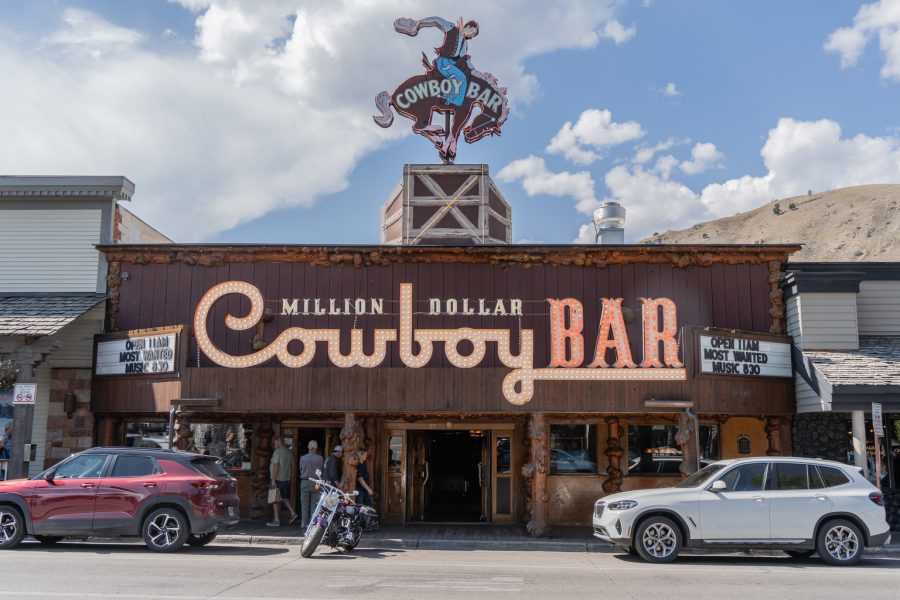
Enterprise software stocks, along with most of the market, jumped following Federal Reserve Chair Jerome Powell’s speech on Friday morning in Jackson Hole, Wyo.
Powell indicated the central bank is possibly considering another rate cut in September.
Palantir (NASDAQ:PLTR), which suffered from multiple days of share price decline, promptly reversed course, climbing 4% by noon trading. Zoom (ZM) was leading the pack with a 10% surge as the speech came on top of its latest positive financial results.
ServiceNow (NYSE:NOW) edged up 1.3%, Oracle (NYSE:ORCL) ticked up 1.5%, while Atlassian (NASDAQ:TEAM) and Appian (APPN) both increased 3.4%. Salesforce (NYSE:CRM) had inched up 0.5%, and SAP (NYSE:SAP) was up 1%.
The software giant Microsoft (NASDAQ:MSFT) added 0.7%. Monday.com (NASDAQ:MNDY) had climbed 3% as it attempted to reverse a 36% plunge that has accrued over the past month. Adobe (NASDAQ:ADBE) perked up 1.9%.
Cybersecurity software stocks were also riding the wave. CyberArk (CYBR) and Palo Alto Networks (PANW) both climbed 1%, CrowdStrike (CRWD) increased 2%, and Fortinet (FTNT) jumped 3%.
The fed chair was relatively upbeat on the state of the U.S. economy, but he did note some potential issues stemming from tariffs and immigration policy.
“Changes in trade and immigration policies are affecting both demand and supply,” Powell said. “In this environment, distinguishing cyclical developments from trend, or structural, developments is difficult. This distinction is critical because monetary policy can work to stabilize cyclical fluctuations but can do little to alter structural changes.”
Although payroll job growth was slower than expected, “it does not appear that the slowdown in job growth has opened up a large margin of slack in the labor market—an outcome we want to avoid,” he said. “The unemployment rate, while edging up in July, stands at a historically low level of 4.2% and has been broadly stable over the past year.”
“The effects of tariffs on consumer prices are now clearly visible,” Powell said. “We expect those effects to accumulate over coming months, with high uncertainty about timing and amounts. The question that matters for monetary policy is whether these price increases are likely to materially raise the risk of an ongoing inflation problem. A reasonable base case is that the effects will be relatively short-lived—a one-time shift in the price level.”