naruedom
Two of the world’s biggest oil companies, Exxon Mobil (NYSE:XOM) and Chevron (NYSE:CVX), are locked in a tense dispute over rights to a massive oil project in Guyana, a clash that has strained ties between their top executives and could reshape the balance of power in the global energy industry, The Wall Street Journal reported Sunday.
The standoff centers on Chevron’s (NYSE:CVX) proposed $53 billion acquisition of Hess Corp. (NYSE:HES), which holds a 30% stake in Guyana’s prized offshore oil fields. Exxon (NYSE:XOM), which leads the consortium developing the field, claims it has the contractual right to preempt the deal, effectively allowing it to block or match Chevron’s (CVX) bid. Chevron (CVX) and Hess (NYSE:HES), however, maintain that the clause does not apply to full corporate takeovers.
Efforts to resolve the matter privately have collapsed, and the conflict now heads to a confidential arbitration hearing in London beginning Monday. A ruling is expected later this summer, potentially by August or September.
The dispute has put a chill on what was once a cordial relationship between Exxon (XOM) Chief Executive Darren Woods and Chevron (CVX) Chief Executive Mike Wirth, who until recently spoke regularly and dined together to discuss shared projects. That rapport has reportedly frayed since Exxon’s (XOM) intervention.
Guyana’s oil boom
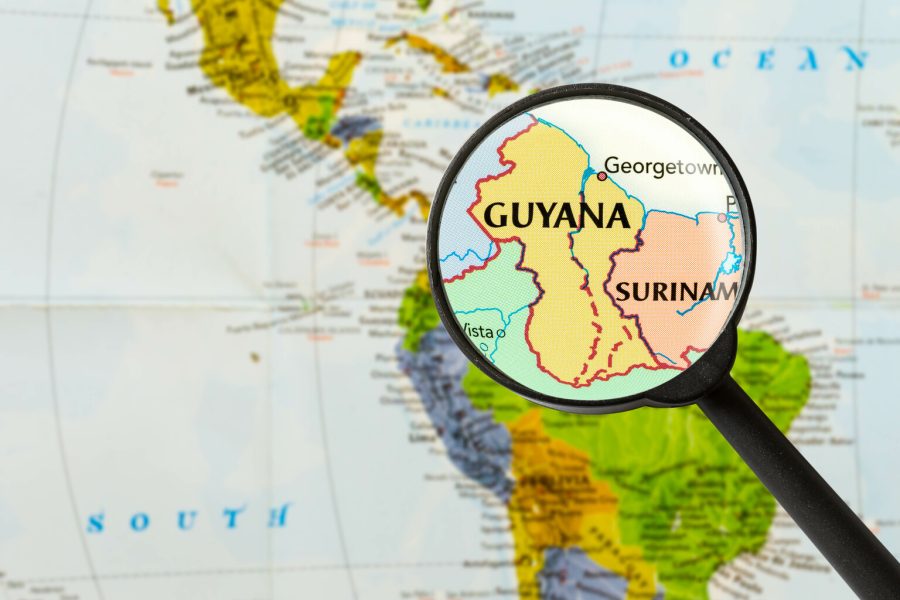
At the heart of the conflict is Guyana’s oil boom, one of the most significant oil discoveries in decades. The Exxon-led (XOM) partnership, which also includes China’s Cnooc, is currently producing around 650,000 barrels a day, with ambitions to double that by 2027. Hess’s (HES) share of the operation could be worth as much as $40 billion, making the outcome of the arbitration critical to Chevron’s (CVX) long-term growth plans.
Chevron (CVX) announced the Hess (HES) deal in October 2023, hoping to diversify its production portfolio and strengthen its post-2030 outlook. Analysts say missing out on (HES) would leave few comparably attractive acquisition targets. Meanwhile, political uncertainty is rising: the U.S. government plans to let Chevron’s (CVX) license in Venezuela expire, cutting off access to another major oil reserve.
Exxon’s (XOM) leadership has framed the dispute as a matter of shareholder responsibility. Woods told analysts late last year that Exxon (XOM) invested heavily in Guyana when few others were interested and shouldn’t be sidelined by a private deal between its partner and a third party, the Journal reported.
Echoes of past disputes
The broader industry is watching closely. In Houston and beyond, the dispute has stirred memories of past oil sector power struggles, such as the Texaco-Pennzoil case of the 1980s, and revived concerns about vulnerability to activist investors. Experts warn that poor strategic decisions or failed deals can open the door to shareholder pressure, especially in an era of tighter margins and increased scrutiny.
Despite Exxon’s (XOM) stronger recent performance — its stock has outpaced Chevron’s (CVX) for the past few years — Chevron’s (CVX) acquisition of Hess (HES) could significantly narrow that gap. Yet the longer the uncertainty drags on, the more difficult it becomes for Chevron (CVX) to pivot to other opportunities.
Even if Exxon (XOM) and Chevron (CVX) eventually find a way to cooperate in Guyana, insiders suggest that rebuilding trust between their executive teams will take years, not quarters.
More on Exxon Mobil, Chevron, etc.
- Chevron’s $3bn Challenge: Venezuela
- Hess Corporation: Another Platform Begins Operations Soon (Rating Upgrade)
- Exxon Mobil: Sell Before It’s Too Late
- Chevron may receive minimum maintenance license for Venezuela oil operations
- Chevron’s Venezuela oil license will end next Tuesday as planned, Rubio says