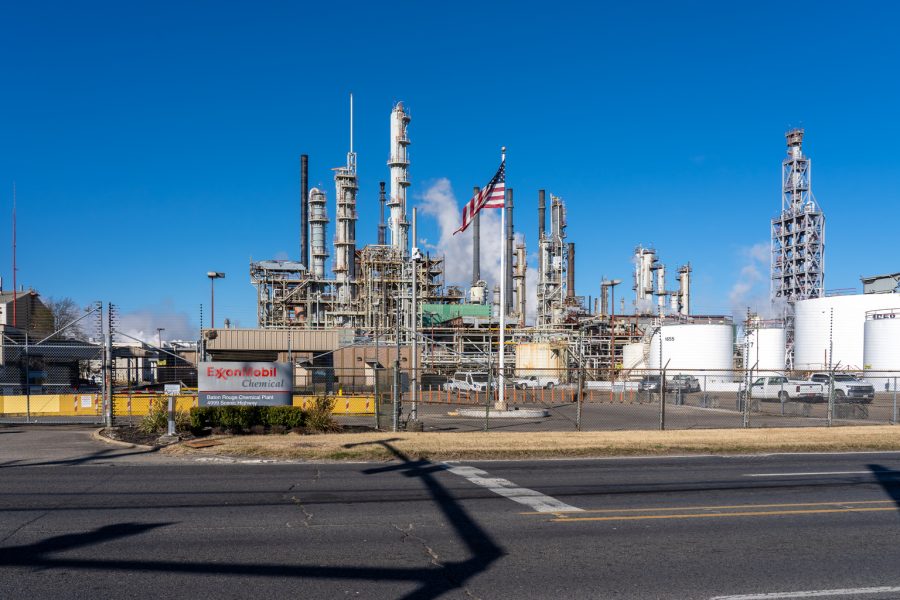
ExxonMobil’s (XOM) global refining business is significantly underappreciated by investors and could provide a meaningful earnings and cash-flow tailwind through the rest of the decade, according to analysts at financial-services firm UBS.
Analysts led by Manav Gupta estimate ExxonMobil (XOM) controls nearly 4.1 million barrels a day of refining capacity across 15 refineries worldwide, a scale that provides earnings stability and a hedge against lower crude prices. The bank calculates that each $1-per-barrel increase in refining margins adds roughly $800 million to annual earnings in Exxon’s energy products segment.
Analysts project free cash flow from the downstream energy products business of about $3.6 billion in 2026, rising to roughly $5.0 billion by 2029. That cash flow is expected to account for around 10% of ExxonMobil’s (XOM) total free cash flow and cover more than a quarter of its dividend commitments, UBS said in a Jan. 9 report to clients.
UBS estimates Exxon’s (XOM) refining assets could generate about $6.3 billion in earnings before interest and tax in a mid-cycle environment, with the largest contributions coming from the U.S. Gulf Coast, Europe and Canada. The firm highlighted Exxon’s (XOM) strong positioning to process heavy, sour crude, particularly from Venezuela, noting that its Gulf Coast refineries are well configured to benefit from wider quality differentials.
The report also points to recent and ongoing upgrades at major facilities, including Beaumont, Baytown, and Baton Rouge, which UBS says should lift product yields and increase exposure to higher-value fuels and base stocks over time. These investments, combined with disciplined capital spending, are expected to support stronger downstream profitability even if oil prices soften.
UBS maintains a Buy rating on ExxonMobil (XOM) with a 12-month price target of $145, implying more than 20% upside from recent levels. The valuation is based on a multiple below Exxon’s (XOM) historical average, which UBS argues fails to fully reflect the durability and earnings power of its refining and integrated operations.