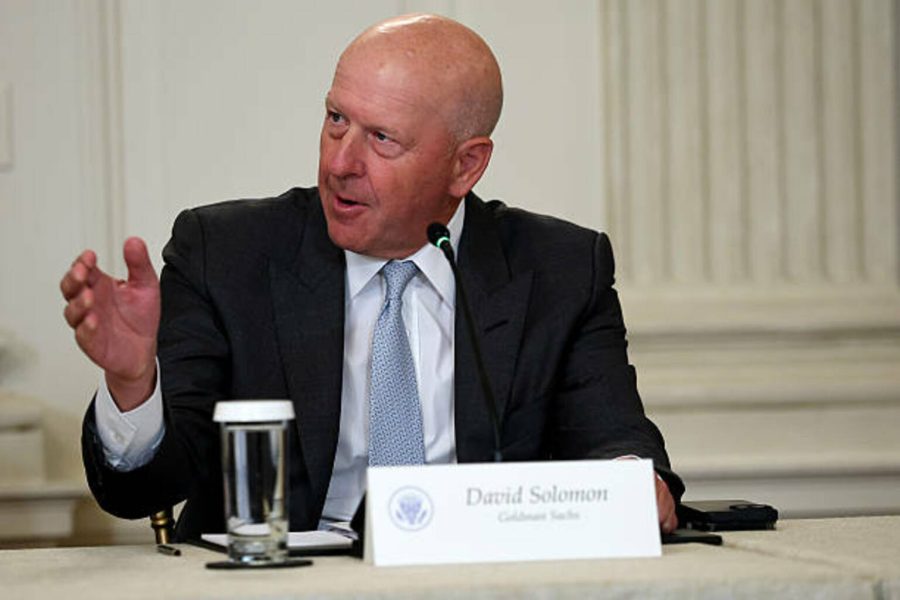
Goldman Sachs (GS) Chairman and CEO David Solomon said on Wednesday he disagrees with Federal Reserve Governor Michael Barr’s view, expressed on Tuesday, that “growing pressures to weaken ((bank)) supervision” are creating “real dangers to the American people.”
Instead, Solomon thinks that regulators have gone too far in demanding documentation and creating processes for things that don’t affect the safety and soundness of the financial system, he said in an interview on CNBC.
A memo, written by an official at the Fed, highlighted “how over the last handful of years the expansion of supervisory reach into processes and documentation, and things that really don’t affect safety and soundness, expanded massively,” Solomon said.
Under Fed Vice Chair for Supervision Michelle Bowman, the central bank is now “creating a regulatory framework that focuses on risk issues that matter in the safety and soundness of these institutions,” he said, adding “I think the regulatory structure that protects safety and soundness is incredibly important.”
The rolling back of rules that don’t affect safety and soundness “frees up resources and capital to invest in growth and the business,” Solomon said. “But you’ve always got to be a risk manager and always think about safety and soundness. We welcome that.”
Solomon also said he believes that artificial intelligence is a long-term trend that he doesn’t see reversing. “I’ve got a lot of confidence that the economic benefit, the productivity gains from this technology being deployed in enterprises broadly are going to be extraordinary,” he said.
Whether too much capital is being invested, it will take a while to settle, and different companies will have different outcomes. “You’ll see ups and downs and speed bumps and drawdowns and accelerations. That’s going to continue for a number of years,” Solomon said.
He’s not worried about the biggest companies investing in AI. “The hyperscalers are big businesses that have enormous cash flow, and there’s no question they’re taking more of their cash flow and investing it in these projects. But they still have a lot of free cash flow,” Solomon said.
“Where I think it gets more complicated is where you’re talking about new companies and private capital formation,” he added. “And there are winners and losers. That’s risk capital. And there, it’s harder to predict who the winners and losers will be.”