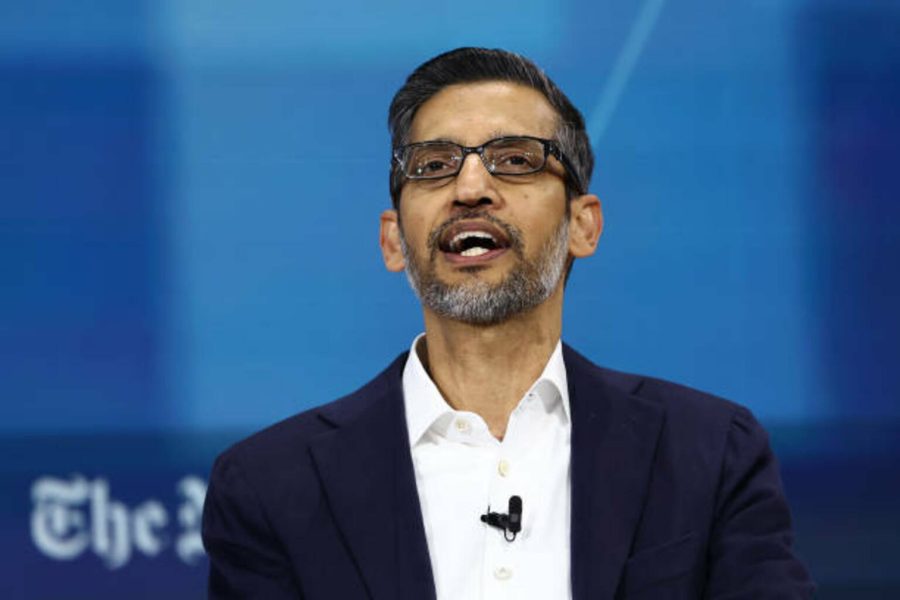
Sundar Pichai, head of Google’s (GOOG) (GOOGL) parent company Alphabet, struck a cautiously optimistic chord on AI in a recent interview with BBC, noting that the boom in investments has been “extraordinary” but there is some “irrationality.”
“We can look back at the internet right now. There was clearly a lot of excess investment, but none of us would question whether the internet was profound … I expect AI to be the same. So I think it’s both rational and there are elements of irrationality through a moment like this,” Pichai said.
The executive also warned that companies across industries would be vulnerable to the impacts of the AI bubble bursting.
“I think no company is going to be immune, including us,” he said, although he expressed confidence that Google would be able to absorb the effects.
In addition, Pichai acknowledged that Alphabet’s intensive energy requirements for its AI bets have hurt its climate targets, but the group continues to target net zero by 2030 through new energy technology investments.
Alphabet’s AI efforts span DeepMind’s advanced research, Google AI’s model development and TPUs, quantum and agentic AI collaborations, climate and infrastructure projects, and healthcare initiatives via Verily and Calico.
Pichai’s comments come amid growing caution among analysts and industry experts.
Meta (META) CEO Mark Zuckerberg has previously also talked about the possibility of an AI-driven market bubble in an episode of Access podcast, and that the rapid pace of AI investment could lead to a more stressed environment.
“There’s definitely a possibility, at least empirically, based on past large infrastructure buildouts and how they led to bubbles, that something like that would happen here,” Zuckerberg said.
A recent report by J.P. Morgan also suggested that the AI sector would need to generate $650 billion in annual revenue just to deliver a modest 10% return on the massive investments expected through 2030.
The artificial intelligence sector is in a bubble that will eventually burst, said Lauren Taylor Wolfe, Impactive Capital managing partner, comparing the current AI investment frenzy to the dot-com era of the late 1990s.