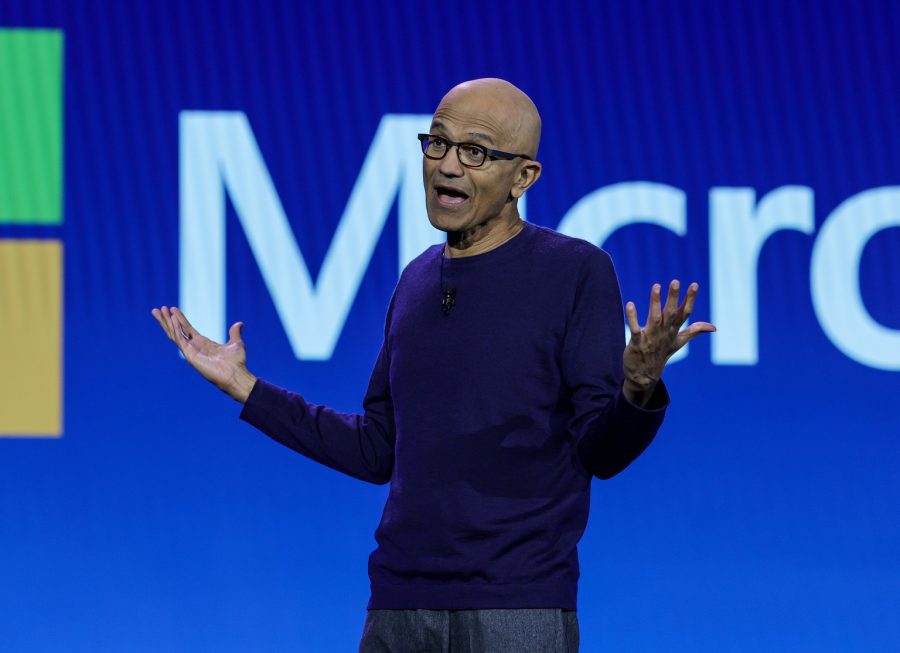
Enterprise software stocks across the board were plunging on Thursday, led by Microsoft (MSFT), which was in the midst of its seventh-largest single-day drop in the company’s storied history.
Microsoft had plummeted 12% by early afternoon trading. If it holds, it will rank as the most significant sell-off since March 16, 2020, when it tanked 14.7% during the COVID-19 epidemic. Before that, one has to look all the way back to April 24, 2000, when it plunged 15.6%. That month featured a double whammy after a U.S. district judge ruled that Microsoft had violated the Sherman Antitrust Act. That was also when the dot-com bubble began to burst.
Today’s plunge has also wiped away nearly $400B in Microsoft’s market capitalization. If it holds, it will be the second-largest single-day decline for a company in U.S. stock market history. The largest occurred last January when Nvidia (NVDA) plunged 17%, erasing nearly $600B in market cap.
Microsoft’s market cap was down to $3.16T on Thursday. In July 2025, Microsoft had become only the second company to ever reach the exclusive $4T market cap club. Nvidia also reached a $4T market cap that month. Today, it is at $4.6T.
Microsoft’s historic drop today came on the heels of a second-quarter fiscal 2026 earnings report that appeared positive by nearly every metric, according to most financial analysts.
However, Microsoft did indicate it was facing some capacity restraints related to AI demand. What’s more, remaining performance obligations reached $625B, with about 45% of that coming from its strategic partner OpenAI (OPENAI).
“Approximately 45% of our commercial RPO balance is from OpenAI,” said Microsoft Chief Financial Officer Amy Hood during Wednesday’s earnings call. “The significant remaining balance grew 28% and reflects ongoing broad customer demand across the portfolio.”
“But the 45% concentration in a single name, especially a company like OpenAI that is cash-burning and reliant on continuous funding to keep going, is a risk that I believe should not be ignored,” said Seeking Alpha analyst Hunting Alpha. “This is especially since there is greater scrutiny on the ROI of massive AI-related spends without profitability in the current environment.”
The massive buildout of AI infrastructure has also led to lower gross profit margins, which have declined from 72% to 67% over the past five quarters.
Other software stocks demonstrating significant declines on Thursday included ServiceNow (NOW), which had also dropped 12%, and Varonis Systems (VRNS), which had fallen 10%. ServiceTitan (TTAN) had declined 10%, Workday (WDAY) had declined 9%, Datadog (DDOG) had sunk 8.5%, Atlassian (TEAM) had plunged 12%, and SAP (SAP) had tanked 15%. HubSpot (HUBS) had also plummeted 12%.