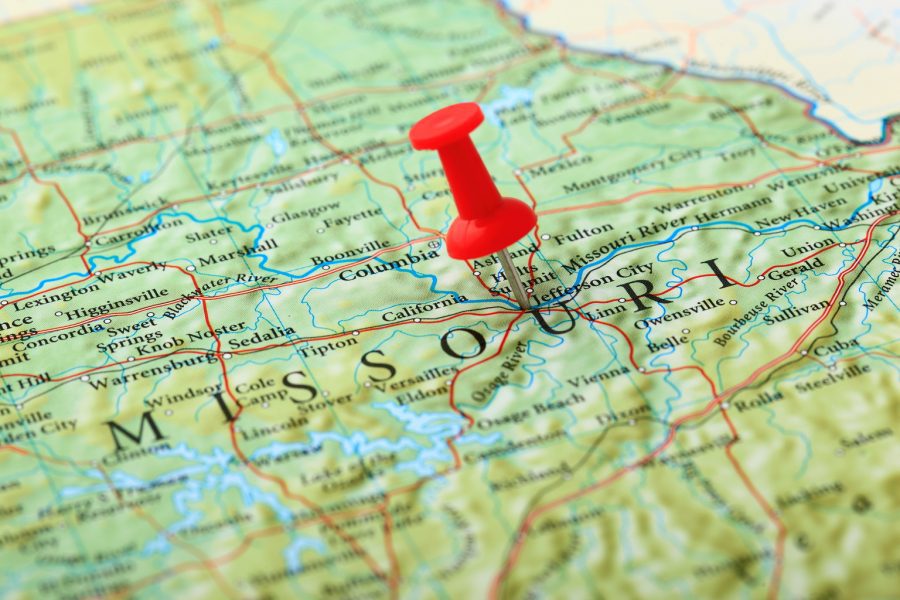
Missouri officially launched legal sports betting statewide on December 1. Analysts expect a highly competitive online market for the 19th largest state, anchored by national brands and local team partnerships. The first-year handle in the Show Me State is expected to be $3.5 billion to $4.0 billion.
Sports betting in Missouri was legalized via voter-approved Amendment 2 in November 2024. The framework allows up to 14 online licenses, including two untethered licenses and the rest tied to the state’s casinos and eligible professional sports teams. The Missouri Gaming Commission will be responsible for licensing, compliance, and integrity oversight.
Online operators expected at or very near launch include bet365, BetMGM (MGM) (OTCPK:GMVHF), Caesars Sportsbook (CZR), Circa Sports, DraftKings (DKNG), Fanatics Sportsbook (FANA), FanDuel (FLUT), and theScore Bet (PENN’s (PENN) ESPN BET rebrand). The launch date hits at an extremely busy time on the sports calendar, which has the main players using aggressive promotions with an aim to grab early market share.
What to watch
Missouri is the 39th state with legalized sports betting. Looking ahead, Nebraska lawmakers are considering proposals to add statewide online/mobile betting on top of the existing retail framework, while sports betting legislation efforts are also still active in Oklahoma, Georgia, and Minnesota. There has also been speculation in the industry that Texas could see another constitutional amendment push. New Mexico, North Dakota, Florida, and Washington could consider expanding sports betting beyond tribal casinos. The outlook for non‑legal states such as Alabama, Alaska, California, Hawaii, Idaho, South Carolina, and Utah looks less clear.
Some industry analysts forecast that all 50 states will legalize sports betting within five years due to the sudden rise of prediction market platforms such as Polymarket (POLYMARKET), Kalshi (KALSHI), and Robinhood (HOOD) with its recent launch. The prediction market activity in states without legalized sports betting is seen pushing state politicians to adopt a friendlier stance.