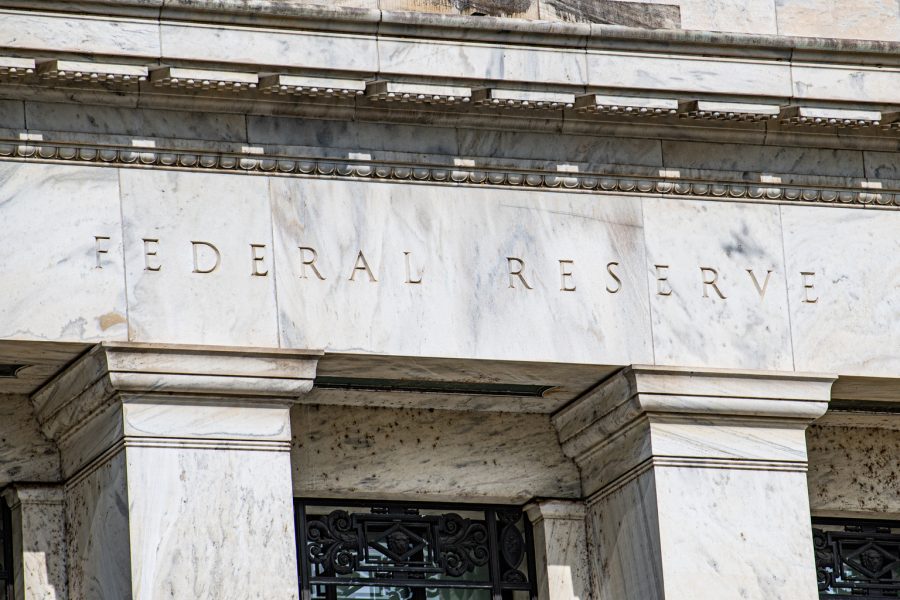
The Federal Reserve on Monday said most U.S. banks continued to hold capital levels well above regulatory requirements in the second quarter.
More than 99% of all banks were well capitalized as of Q2, the central bank said in a supervision and regulation report. Aggregate common equity tier 1 (CET1) risk-based capital ratios were around 13% for both large and small lenders, holdings roughly steady from a year earlier.
“Furthermore, 2025 stress test results showed that large banks are well positioned to weather a severe recession while maintaining minimum capital requirements and the ability to lend to households and businesses,” the Fed said.
Still, Fed bank supervisors flagged weaknesses in capital planning and liquidity risk-management practices at Wall Street banks. They are also monitoring the commercial real estate portfolios of community and regional lenders, as “elevated interest rates, tighter underwriting standards, and lower commercial property values may affect CRE borrowers’ ability to refinance or pay off their loans.”
Such factors could impact the ability for borrowers to refinance or pay off their debt obligations, the report said.
In the meantime, banking regulators are pushing for relaxed capital requirements under the pro-growth Trump administration. Last month, the Fed and other watchdogs reportedly agreed on a final plan to ease capital rules, sending a proposal for the enhanced supplementary leverage ratio to the White House for review.
Banking titans include: Citigroup (C), Bank of America (BAC), JPMorgan Chase (JPM), Wells Fargo (WFC), Goldman Sachs (GS) and Morgan Stanley (MS).