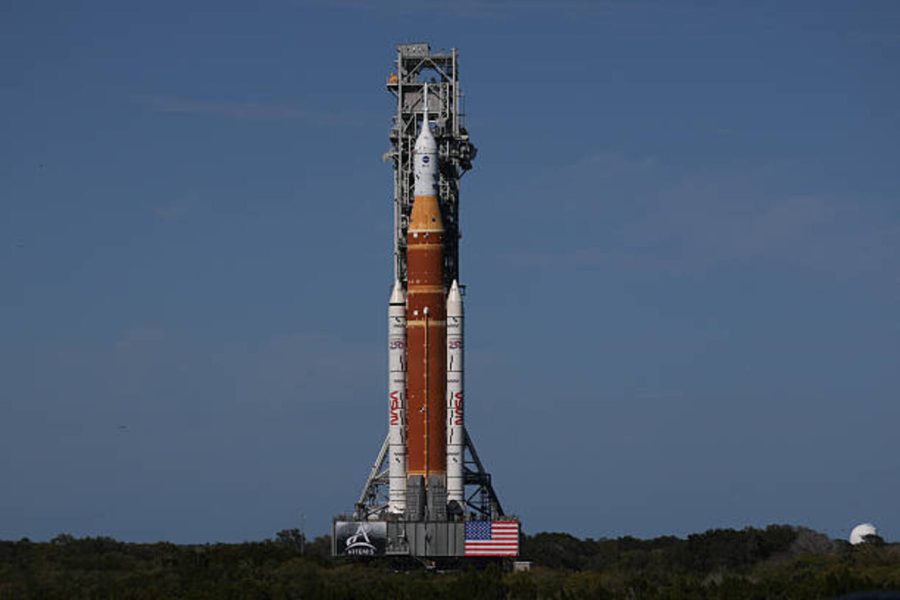
NASA on Monday kicked off a full-scale fueling test for its Artemis II mission, marking a major milestone as the agency prepares to send astronauts back toward the moon for the first time in more than 50 years.
The test, known as a wet dress rehearsal, involves fully loading propellant into the Space Launch System rocket at Kennedy Space Center and running through launch-day procedures short of engine ignition. Engineers will practice chilling and pumping fuel into the rocket, carrying out a countdown, and then safely draining the propellants.
The exercise is designed to confirm that the National Aeronautics and Space Administration can safely launch the Boeing-built (BA) Space Launch System with the Lockheed Martin (LMT) Orion spacecraft for a 10-day mission that will loop around the moon and return to Earth.
NASA has said the earliest possible launch window opens Feb. 8, though an official date will not be set until the rehearsal is complete. During the test, teams will stop short of firing the engines because the rocket’s boosters can only be ignited once.
After more than a decade of development, the Space Launch System has faced cost overruns and delays, with each mission carrying a price tag exceeding $4 billion. Artemis II will be the second flight of the rocket and spacecraft combination, following the uncrewed Artemis I mission in 2022, which required multiple rehearsal attempts due to technical setbacks.
The Artemis II crew will not participate in Monday’s test as they remain in pre-launch quarantine. The mission will carry NASA astronauts Reid Wiseman, Victor Glover, Christina Koch, and Canadian Space Agency astronaut Jeremy Hansen, and will focus on validating Orion’s life-support systems ahead of Artemis III, a crewed lunar landing currently targeted for no later than 2028.