CR/iStock via Getty Images
Goldman Sachs lowered its forecast for the total market for anti-obesity drugs through the end of the decade.
Asad Haider, head of the healthcare business unit within Goldman Sachs Research, now forecasts the market for anti-obesity drugs, particularly those using injectable versions of GLP 1-based drugs, to hit $95 billion by 2030, down from and earlier estimate of $130 billion.
“The new figure reflects trends influencing how these drugs are priced, how long patients stay on them, and how patient populations are segmented,” Haider said.
“Broadly, our new forecast takes into account higher price erosion — which is to say, declining prices per unit of medication,” he said.
Other factors include:
- Insurance companies may be more stringent in covering the costs of these drugs.
- The potential patient population may also be segmented across different weight-loss needs, rather than addressed with a “one-size-fits-all” approach incorporated into the previous projection.
- Increasing consumerization — “which essentially means people paying out of pocket for lower-priced versions of these drugs, particularly in markets outside the US as they grow.”
The biggest players in weight-loss drugs are Eli Lilly (NYSE:LLY) with Zepbound and Novo Nordisk (NVO) with Wegovy.
Anti-obseity drug market. (Goldman Sachs) 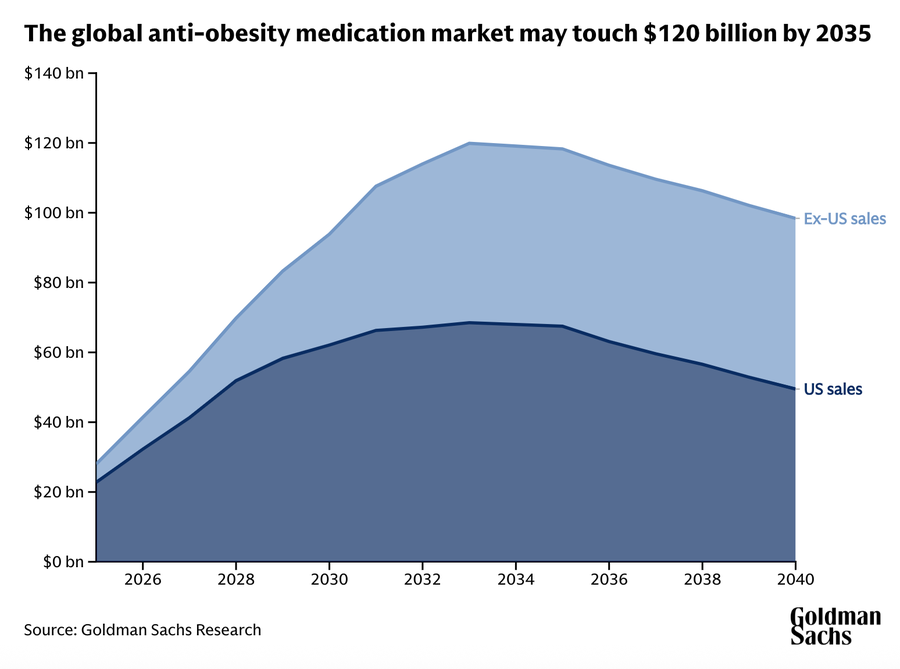
More on Eli Lilly, Novo Nordisk
- Novo Nordisk’s CEO Ousted: Deep-Value Opportunity With Sentiment Risks
- Eli Lilly: Obesity Drug Development To Go Beyond That Of Zepbound
- Novo Nordisk Stock: Seems Like A No-Brainer At These Levels
- Trump threatens to limit imports if countries don’t pay more for drugs
- Novo Nordisk promotes Wegovy for new customers as compounding ban takes effect