How will retailers fare this holiday season amid increased tariffs, persistent inflation, and heightened concern about the state of the U.S. economy?
We asked Seeking Alpha analysts APAC Investment News, Daniel Jones, and Daniel Javier who they think the winners and losers might be this holiday season in retail.
APAC Investment News: Just as we’re experiencing a K-shaped economy, I suspect we’ll see a K-shaped holiday season, with wealthier households generally spending profligately while lower-income households tighten their belts. Luxury retailers like LVMH (OTCPK:LVMHF) (OTCPK:LVMUY) and Hermes (OTCPK:HESAY) (OTCPK:HESAF) should do particularly well.
I believe this year we’ll see especially aggressive deal hunting. I’d be careful not to get lured into false confidence, especially due to high engagement on Black Friday and Cyber Monday. A busy Thanksgiving shopping holiday may portend aggressive deal hunting, not stronger overall holiday shopping.
Amazon (AMZN) and Walmart (WMT) are hard to beat price-wise. Ditto for Costco (COST). Target (TGT) is in the middle of a tough turnaround, and I believe they’ll try to make a statement and woo back customers with cheap deals. Also, I believe the Nintendo (OTCPK:NTDOY) Switch 2 will rank among the most popular gifts.
I don’t think the holidays will be as bad as the most cynical economic indicators might suggest, but I suspect people will lean into using credit, which might cause problems later. Retailers may enjoy a share price bump throughout December, but I believe that’ll cool off come the new year.
Daniel Jones: This is going to be a really interesting holiday season. With consumer confidence levels near all-time lows, employment data looking awful, drama associated with the government shutdown in the U.S., and the negative effects stemming from tariffs, it’s likely that retailers will face challenges this season. However, there are some that might do surprisingly well.
Even though I am bearish about the company because of how expensive shares are, Winmark Corporation (WINA) operates a franchise business model that focuses on reselling used items. This is a value-driven enterprise, and with consumers likely to pinch pennies this season, more than at perhaps any time in years, I could fully expect its revenue to come in stronger than what you might think likely.
Another retailer that is probably going to do quite well is video game retailer GameStop (GME). When it announced its last quarterly results, it posted some strong growth in key areas. This was likely because of the successful Nintendo (OTCPK:NTDOY) Switch 2. Earlier this month, Nintendo announced that it was increasing its sales forecast for this gaming console to 19 million units for the fiscal year ending in March of 2026. That compares to the previous forecast of 15 million units. The sale of these consoles, as well as related accessories, could prove positive for GameStop.
Discount play Five Below (FIVE) also looks likely to do well. Its stock price is up 83% this year alone, thanks to strong fundamentals and continued store growth. This optimism comes from my overall thesis of a weakening economy that will push customers to focus more on cheaper items.
I would venture to say retailers that fall outside the value category and the niche space, like GameStop (GME), which is benefiting from a catalyst, will probably suffer.
Perhaps the most negatively affected will be furniture retailers. A great example of this can be seen by looking at Hooker Furnishings (HOFT), which has seen its share price drop 46.6% year to date. Even though furniture sales have so far been up this year, a weakening economy will not bode well for this industry. And with this business already experiencing a decline in revenue, profits, and cash flows, despite recent growth in the space, it should be particularly susceptible.
Daniel Javier: Despite stubborn inflation, many retailers may still pull off a good performance this holiday season. The 50-bps rate cut may boost economic activity and labor market conditions. It can also make credit cards more attractive to support holiday spending. Here are my top stocks.
1. Costco Wholesale (COST) may remain inflation-resilient with its membership model. Consumers aim to get more value for their money and do bulk buying.
2. Amazon (AMZN) is another good contender as e-commerce remains solid. Its vast streamlined logistics and global footprint may help manage cost pressures amid new tariffs. Lastly, it can capitalize on AWS for more efficient inventory and pricing management and on Prime to increase membership.
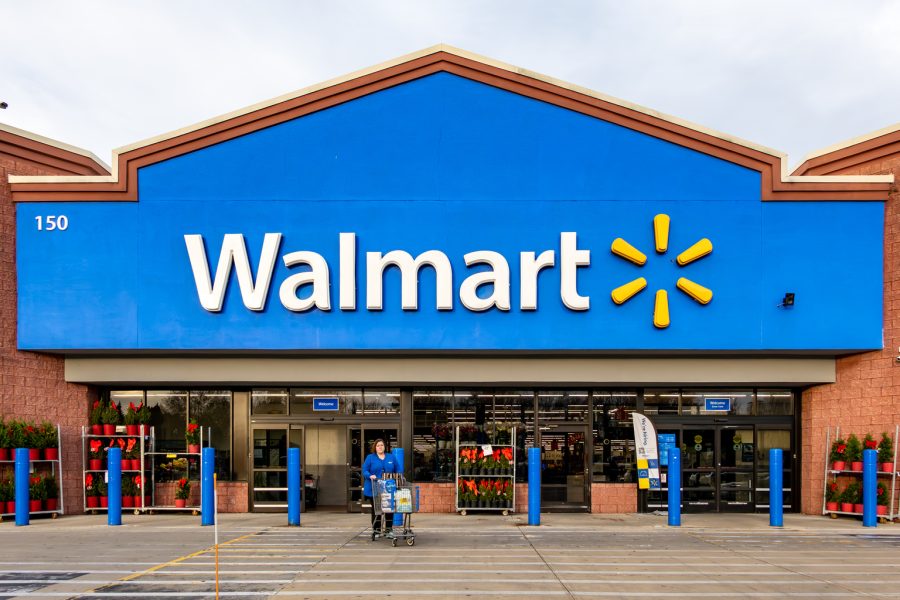
3. Walmart’s (WMT) low-price business model itself is already a value proposition. Its gradual e-commerce growth and pick-up/delivery options may capture demand.
4. Home Depot (HD) is also strategic with its high concentration in states with the largest number of large corporations and high-net-worth individuals, such as California, Florida, New York, and Texas. It may also benefit from the interest rate cut and decreasing mortgage rates due to positive spillovers into the property market.
5. Puregold Price Club (OTCPK:PGCMF) is like a fusion of COST and WMT in the Philippines. But it prudently segments its target market with its two big brands, namely, Puregold and S&R. Puregold targets lower-income and lower-middle-income households with its low-price business model and redeemable points per transaction. Meanwhile, S&R uses a membership model, which targets inflation-resistant buyers coming from middle-income, upper-middle-income, and rich households.
- Top Consumer Staples and Merchandise Retail Stocks
- Top Apparel, Accessories, and Luxury Goods Stocks
- Top Broadline Retail Stocks
- Top Home Improvement Retail Stocks
- Top Other Specialty Retail Stocks