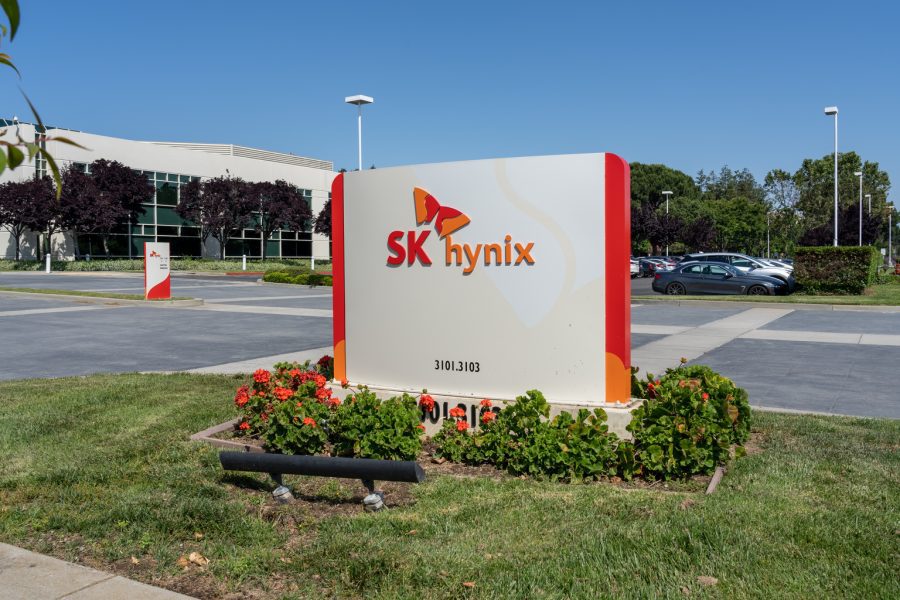
SK Group’s Chairman Chey Tae-won vowed to increase production of AI memory chips to meet the growing demand from the global data center infrastructure buildout, Bloomberg News reported.
Chey also called high-bandwidth memory, or HBM, a “monster chip” that’s generating huge profits for SK hynix (HXSC.F), a unit of SK Group, when speaking at a conference in Washington on Feb. 20, the report added.
SK hynix did not immediately respond to a request for comment from Seeking Alpha.
Chey did not disclose the scale of the company’s expansion. SK hynix said in January that its capital expenditure in 2026 will rise significantly from its spending last year to meet the demand for HBM chips.
Nvidia (NVDA) uses HBM chips for its AI accelerators. South Korean company SK hynix is a major supplier of HBM chips to Nvidia and competes with compatriot Samsung Electronics (SSNLF) and American company Micron Technology (MU).
U.S. tech giants from Microsoft (MSFT) to Meta Platforms (META) are allocating about $650B this year for infrastructure spending to build AI technologies. This record spending is causing a global shortage of memory chips, the report added.
Meanwhile, Chey also cautioned losses are still possible in the future because of potential changes in the competitive landscape due to rapid technological shifts.
The average of analysts forecasts for SK hynix’s annual operating profit for 2026 has grown to $70B in January from about $50B late last year, and some have raised that again to over $100B, as per Chey, the report noted.
“That sounds like really good news,” said Chey, “but it could just as easily turn into a $100 billion loss.”
Chey also pointed to growing infrastructure challenges. He said SK Group is now exploring setting up power plants alongside AI data centers, as failure to meet energy demand could be “disastrous,” the report added.
Last month, SK hynix reported record revenue and operating profit for the fourth quarter of 2025. The company also said that it will establish an AI solutions firm in the U.S. and commit $10B to the AI company.