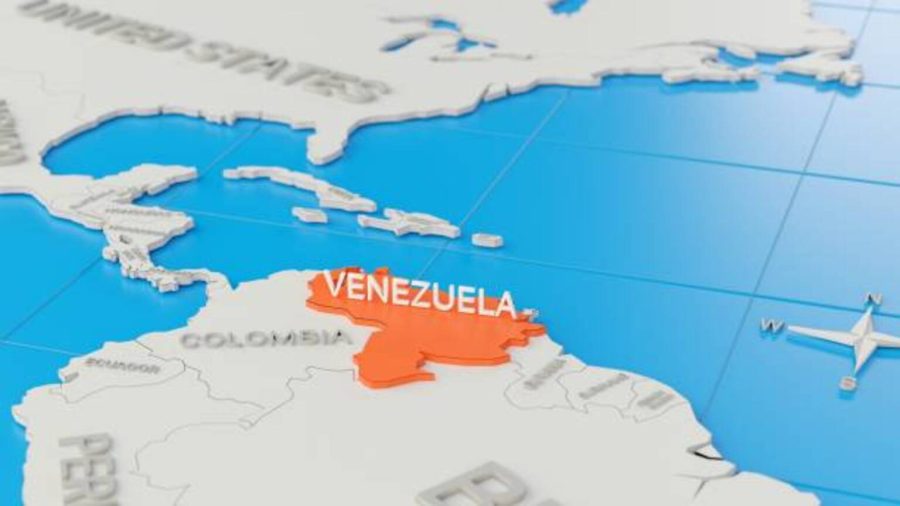
For much of the past year, Washington framed its pressure campaign against Venezuela as a crackdown on narcotics trafficking. Following the sudden U.S. operation to remove President Nicolás Maduro, the emphasis has shifted toward energy: specifically, opening the door for American oil companies to tap one of the world’s largest crude reserves.
Speaking at Mar-a-Lago after the surprise military action early Saturday, President Donald Trump said the operation would allow U.S. energy firms to reestablish a presence in Venezuela’s long-neglected oil sector.
“We’re going to have our very large United States oil companies, the biggest anywhere in the world, go in, spend billions of dollars, fix the badly broken infrastructure, the oil infrastructure, and start making money for the country,” he said.
Turning that vision into reality, however, could prove difficult. Chevron (CVX) remains the only major U.S. oil company still operating in Venezuela and is currently the country’s largest foreign investor. Other companies are expected to proceed cautiously as they assess political stability in a nation whose energy industry has deteriorated after decades of mismanagement, corruption and state interference.
Ample supplies of crude
Market conditions also complicate Trump’s plan. Global oil markets are already well supplied, and U.S. crude prices remain below $60 a barrel. Those levels limit the appetite for large, high-risk investments. With global output projected to keep rising this year, producers have other, less uncertain options.
Former Chevron (CVX) executive Ali Moshiri noted that price dynamics alone make Venezuela a hard sell for investors, particularly when compared with lower-risk opportunities closer to home, The Wall Street Journal reported. Capital, he told the newspaper, will naturally gravitate toward regions offering clearer returns and regulatory certainty.
The administration hasn’t yet outlined how it would facilitate a broader return of American oil companies. Industry observers say Washington could oversee a bidding process for oil and gas blocks, though questions remain over whether non-U.S. firms, including European companies, would be allowed to participate.
Chevron (CVX) said Saturday that its immediate focus is on employee safety and protecting its assets. The company and its joint ventures employ roughly 3,000 people in Venezuela.
Degraded energy infrastructure
So far this year, Venezuela has produced about 900,000 barrels of oil a day, with Chevron (CVX) accounting for roughly one-third of that output. Much of the country’s crude is heavy and viscous, a grade prized by refiners in the U.S. Gulf Coast, China and India because it can generate higher margins than lighter blends.
While the U.S. shale boom has driven domestic production to record levels, American producers primarily extract lighter oil that is less suitable for certain refining processes. Venezuela’s heavy crude, along with similar grades from Canada and Mexico, remains strategically valuable. The Venezuelan government claims its proven reserves exceed 300 billion barrels, which would make them the largest in the world if verified.
Venezuela’s history of theft
Still, oil companies considering a return are likely to take time. Venezuela has a long history of expropriating foreign assets, including waves of nationalizations in the 1970s and again under former President Hugo Chávez in the 2000s.
ConocoPhillips (COP) and Exxon Mobil (XOM) exited Venezuela in 2007 after their assets were seized. Both companies pursued lengthy arbitration cases, seeking billions of dollars in compensation, though final awards covered only a portion of their claimed losses. Neither company immediately responded to requests for comment.
Legal and political uncertainty remains a central concern. José Ignacio Hernández, a law professor and consultant, said that while Venezuela’s resource base is undeniably attractive, companies will not return without durable political and institutional guarantees, the Journal reported.
Economist Orlando Ochoa, a Caracas-based analyst and visiting fellow at the Oxford Institute for Energy Studies, told the newspaper that rebuilding the energy sector would be a monumental task. Years of authoritarian rule have driven tens of thousands of skilled workers out of the country, hollowing out operational expertise.
Reviving the industry, he said, would require a broad economic stabilization strategy, including access to multilateral financing to repair infrastructure, legal reforms to limit state interference, debt restructuring on roughly $160 billion in obligations, and the resolution of outstanding arbitration claims.
The United States needs to implement a form of a Marshall Plan, Ochoa said, referring to the postwar program that rebuilt Europe.
Now the real work begins
One U.S. oil executive with extensive experience in Venezuela said the removal of Maduro may prove to be the simplest phase of the effort. Establishing a transitional government capable of ensuring security, contract enforcement and long-term stability remains an open question, the executive said.
As uncertainty swirled Saturday over how Venezuela would be governed and what role Washington would ultimately play, Trump repeatedly returned to the subject of oil.
“We are going to be taking out a tremendous amount of wealth out of the ground,” Trump said. He added that the U.S. would retain some of the proceeds “in the form of reimbursement for the damages caused us by that country.”
The comments underscored a view Trump has expressed for years: energy resources can function as both an economic prize and a strategic lever of American power. During past conflicts in Syria, Libya and Iraq, Trump argued that the U.S. should have claimed oil assets to offset military costs or blunt rival influence.
“It used to be to the victor belong the spoils,” Trump said in a 2016 presidential forum. “Now, there was no victor there [in Iraq], believe me. There was no victor. But I always said: Take the oil.”