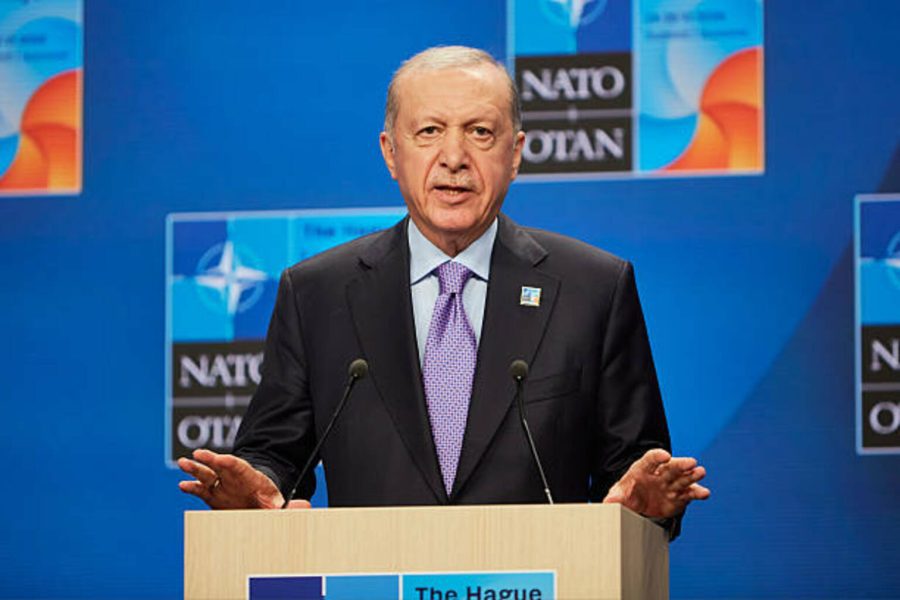
Turkish President Recep Tayyip Erdogan is preparing to strike large-scale deals for U.S.-made aircraft, seeking to pair purchases of Boeing (NYSE:BA) passenger planes and Lockheed Martin (NYSE:LMT) fighter jets with domestic production contracts valued at more than $10 billion, Bloomberg News reported Tuesday, citing people familiar with the discussions.
The plans, which would still need approval from President Donald Trump, are expected to be on the agenda when Erdogan visits the White House on Thursday. The talks come at a pivotal moment as Ankara looks to repair ties with Washington, strained by Turkey’s earlier decision to acquire a Russian-made missile defense system.
Turkey’s acquisition of the Russian S-400 system triggered U.S. sanctions under CAATSA and led to the country’s removal from the multinational F-35 program. Erdogan has refused to scrap the S-400s but hopes Trump may agree to soften the sanctions, potentially reopening the door for Turkey to buy 40 Lockheed F-35A stealth fighters.
Such a deal could also reinstate Turkish companies that had been slated to contribute an estimated $12 billion in F-35 components, including major fuselage parts produced by Turkish Aerospace Industries.
Industry insiders say that Ankara is also pushing to expand participation for its electronics and aerospace firms in the broader U.S. defense supply chain, including software systems and component production that faces tighter EU restrictions, Bloomberg News reported.
Alongside the potential F-35 arrangement, Erdogan is working to finalize the purchase of 40 F-16 Viper jets, along with weapons packages, spare engines and other equipment. Turkey currently fields about 240 F-16s, the world’s second-largest fleet after the United States. New deliveries would allow Ankara to begin retiring its aging F-4 Phantoms until its domestically developed fighter, the twin-engine Kaan, is ready for service.
Turkey is also lobbying for U.S. approval to build and assemble GE Aerospace’s (NYSE:GE) F110 and F404 engines at home. They’re used in both American fighters and Turkey’s new indigenous aircraft, including the Hurjet trainer. Washington has yet to respond, though Ankara argues that local assembly could help meet rising global demand for U.S. engines, Bloomberg News reported.
If Erdogan secures Trump’s backing, the agreements would represent one of the most significant steps toward restoring defense cooperation between the NATO allies in years, while further anchoring Turkey’s ambitions to grow its domestic aerospace and defense industries.