Omar Marques/Getty Images News
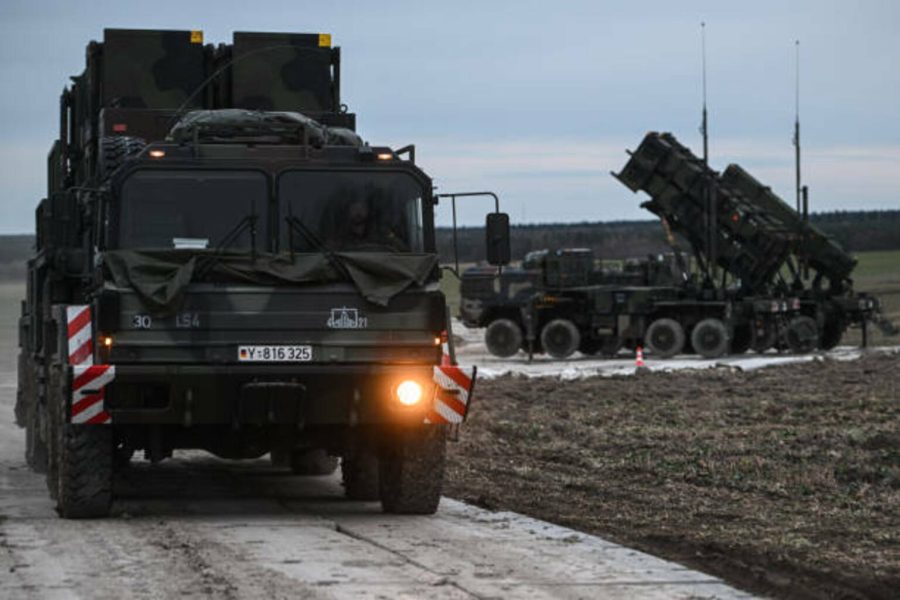
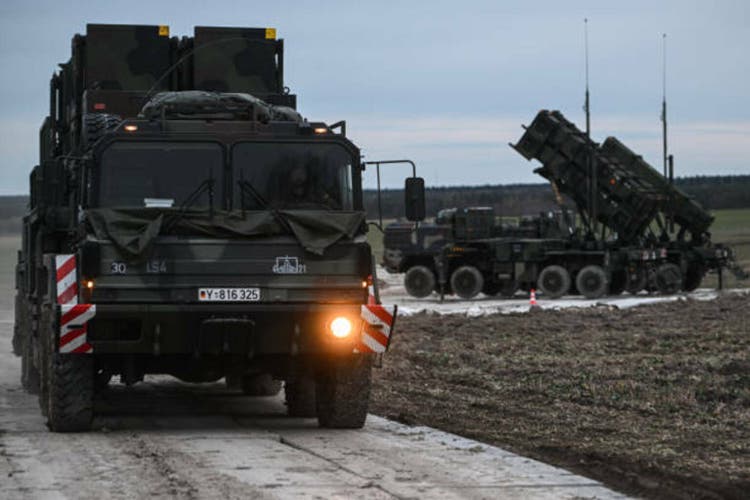
The U.S. Army is planning to allocate more than $1.3 billion toward the purchase of Patriot air-defense missiles in the upcoming fiscal year, and has quietly raised its long-term acquisition target for the advanced interceptors by more than fourfold, reflecting growing demand from both U.S. forces and allies.
Documents tied to the Army’s fiscal 2026 budget show that a top-level advisory panel on weapons requirements increased the total procurement goal for the Patriot’s most advanced variant, the PAC-3 Missile Segment Enhancement (MSE), from 3,376 units to 13,773, Bloomberg News reported. The panel establishes acquisition needs but doesn’t directly dictate funding or immediate contracts.
Still, the updated figures are likely to shape deliberations in Congress as lawmakers draft the annual defense policy and appropriations bills.
The PAC-3 MSE, built by Lockheed Martin (NYSE:LMT), is capable of intercepting a range of airborne threats including drones, cruise missiles, and short-range ballistic missiles. Its propulsion system is produced by L3Harris Technologies (NYSE:LHX). As threats from adversaries grow more complex, the missile’s role in global defense strategy has become increasingly important.
Ukraine has heavily depended on Patriot systems supplied by the U.S. and other nations to shield its cities from Russian missile and drone attacks. Since the start of the full-scale invasion in 2022, the U.S. has delivered three Patriot batteries and an undisclosed number of interceptors to Ukraine, according to multiple news reports.
Meanwhile, American forces have deployed the Patriot system in several Middle Eastern theaters, using it to support Israeli defense efforts and to shield U.S. military assets in the region. The system recently intercepted a barrage of Iranian missiles targeting Al Udeid Air Base in Qatar, with military officials praising the performance of U.S. forces during the incident.
According to Army budget records cited by Bloomberg News, a total of 2,047 PAC-3 MSE missiles were acquired prior to fiscal year 2024, followed by 230 in 2024 and another 214 in 2025.
For fiscal 2026, the Army is requesting $945.9 million for 224 more missiles, split between $549.6 million from the regular defense budget and $396.3 million under Operation Atlantic Resolve, a NATO-focused initiative in Europe. Additional funding from a recently signed tax-and-spending bill will support the purchase of 96 more interceptors at a cost of $366 million.
Industry is already responding to the surge in demand. Lockheed Martin (NYSE:LMT) reported in March that it had boosted production of the PAC-3 by over 30% in 2024, delivering 500 missiles for a new yearly record. The company also announced plans to expand output by an additional 20% this year.
Still, scaling up production remains complex. Army spokesperson Steve Warren acknowledged that while the service has maintained steady investment in the system, increasing output rapidly poses logistical and industrial challenges.
Tom Karako, a defense analyst with the Center for Strategic and International Studies, commented that after years of underinvestment in interceptors, the Pentagon is finally taking meaningful steps to address shortfalls. However, he cautioned that closing the gap will take sustained funding and long-term procurement commitments, and results won’t be immediate, Bloomberg News reported.
More on RTX, Lockheed Martin, etc.
- Boeing: Leadership Changes And A Warning For The Bulls
- Lockheed Martin: Strength And Opportunity In A Geopolitically Complex World
- Lockheed Martin: Well Positioned For Tomorrow’s Wars
- Preliminary report on deadly Air India crash is said to be expected by Friday
- General Dynamics upgraded, Northrop and BWX downgraded at Deutsche Bank