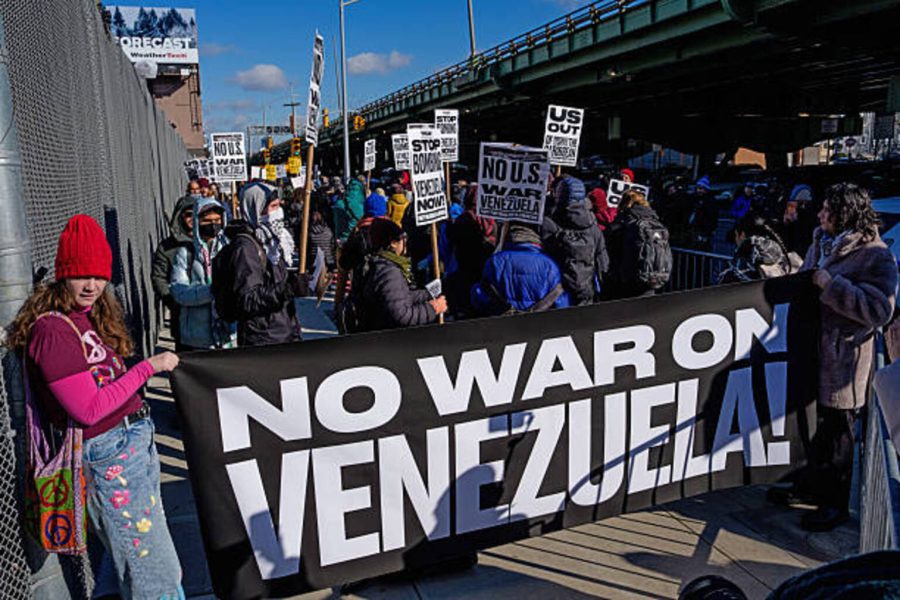
The U.S. capture of Venezuelan leader Nicolás Maduro and Washington’s pledge to “run” the country introduces significant geopolitical risk, operational uncertainty and potentially higher long-term defense spending, according to a new research note from Bernstein.
Douglas Harned, a defense analyst at the firm, warned that while supporters of the move have pointed to past U.S. interventions as precedents, the path forward in Venezuela appears narrow and fraught with risk.
“It is unclear how U.S. control of Venezuela will play out,” Harned wrote, adding that “the path to success looks narrow, risky and must navigate regime infrastructure, opposition involvement and U.S. goals.”
President Donald Trump said over the weekend that the U.S. would effectively assume control of the country following Maduro’s arrest and suggested Venezuela’s oil resources could help offset the cost of U.S. involvement. However, Harned cautioned that history suggests such assumptions often prove overly optimistic.
“In Iraq, the U.S. expected the country could be transitioned with a small U.S. military force and that Iraqi oil would pay for the costs,” he wrote. “None of this worked out,” noting that the conflict ultimately required as many as 170,000 troops and cost well over $1 trillion.
Bernstein said Venezuela differs sharply from past interventions often cited as successes, such as Panama, where the U.S. had substantial economic assets and faced a far smaller population. Venezuela’s population of roughly 29 million, combined with degraded infrastructure and political fragmentation, raises the likelihood of prolonged engagement, the report said.
Harned added that planning and authority structures remain opaque, with no clear leadership framework yet outlined by the State Department. He noted that while U.S. defense and engineering consulting firms are already developing proposals, funding sources remain uncertain.
“We have yet to see plans for Venezuela,” Harned wrote, adding that “some form of U.S. government security funding will be needed, or potentially funding from oil companies.”
Despite the uncertainty, Bernstein sees potential upside for U.S. defense stocks if geopolitical tensions persist. Historically, heightened military risk has translated into higher defense budgets, a trend Harned expects could re-emerge as early as fiscal 2027.
“Almost always, when threats of military action increase, defense budgets move higher,” Harned said, calling the current environment “supportive” of increased defense spending even as the administration pursues other priorities such as missile defense, shipbuilding and munitions production.
Bernstein also warned that the Venezuela operation could be a precursor to broader regional or global escalation, citing rhetoric toward Colombia, Cuba and Iran, as well as the potential for responses from Russia or China.
Dear Readers: We recognize that politics often intersect with the financial news of the day, so we invite you to click here to join the separate political discussion.