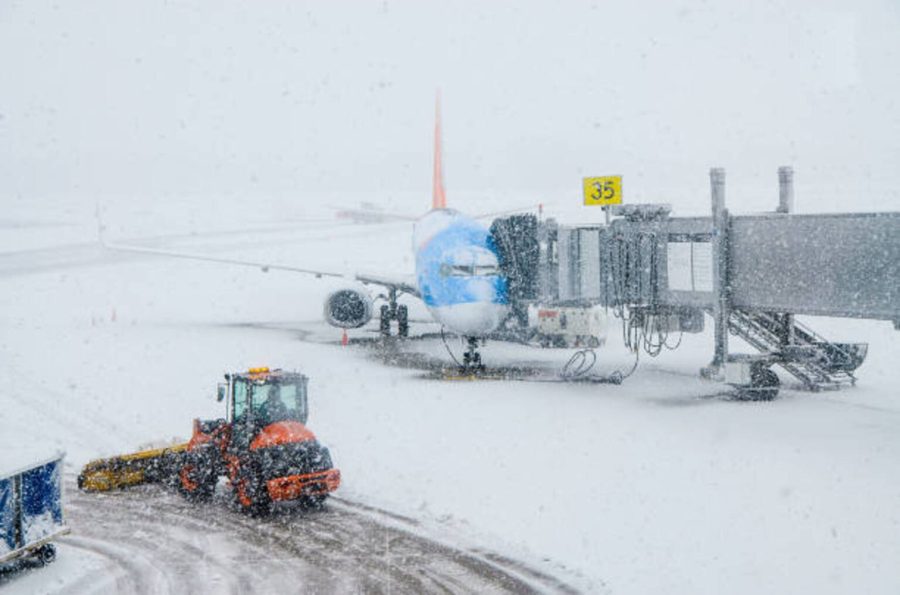
After a major winter storm slammed the Northeast and snarled airline traffic as travelers were making their way home after the Christmas holiday, a second storm is barreling down on the Midwest, threatening another wave of major delays and cancellations.
On Sunday, nearly 10,000 flights into or out of the U.S. were delayed or cancelled due to blizzard conditions across midwestern states Iowa, Michigan, Minnesota, and Wisconsin following a warning from the National Weather Service of a “dangerous, potentially life-threatening travel conditions through early Monday morning.”
The powerful storm then ripped through the Northeast, creating hazardous travel conditions from Pennsylvania to Massachusetts interrupting air traffic at some of the nation’s largest airports.
Among the major carriers, JetBlue (JBLU) bore the brunt of cancellations, with more than 200 cancelled flights.
In the wake of the weekend storm, forecasters are now warning of a second storm threatening both the Midwest and Northeast bringing potentially blizzard conditions.
“Winter Storm Ezra has arrived across the Upper Midwest and will target the Northeast as well, bringing snow, rain and wind, and possible blizzard conditions, to areas just impacted by Winter Storm Devin,” The Weather Channel warned on Monday morning, with the storm expected to reach northern Maine by Tuesday.
With shares of the major carriers only marginally lower at Monday’s open (JetBlue, Delta, and Alaska Air Group are taking on heavier losses) the financial impact from thousands of delayed or cancelled flights, as well as increased operational costs and costs associated with refunded fares, could weigh on fourth quarter profitability. The cost of de-icing just one aircraft can cost a carrier as much as $10,000 per event and reach nearly $25,000 per plane in heavy snow.
And the winter of 2025/2026 has just begun. According to the National Weather Service, a weak La Nina system will likely result in drier conditions in the Southeast and Southwest, while the North, Midwest and Northeast will experience colder temperatures, significant snow, and increased lake-effect snow.