Golden_Brown/iStock via Getty Images
After a knee-jerk reaction lower on the initial headlines, retailers that depend on Vietnamese manufacturing have recouped losses and are unchanged to slightly higher on the day.
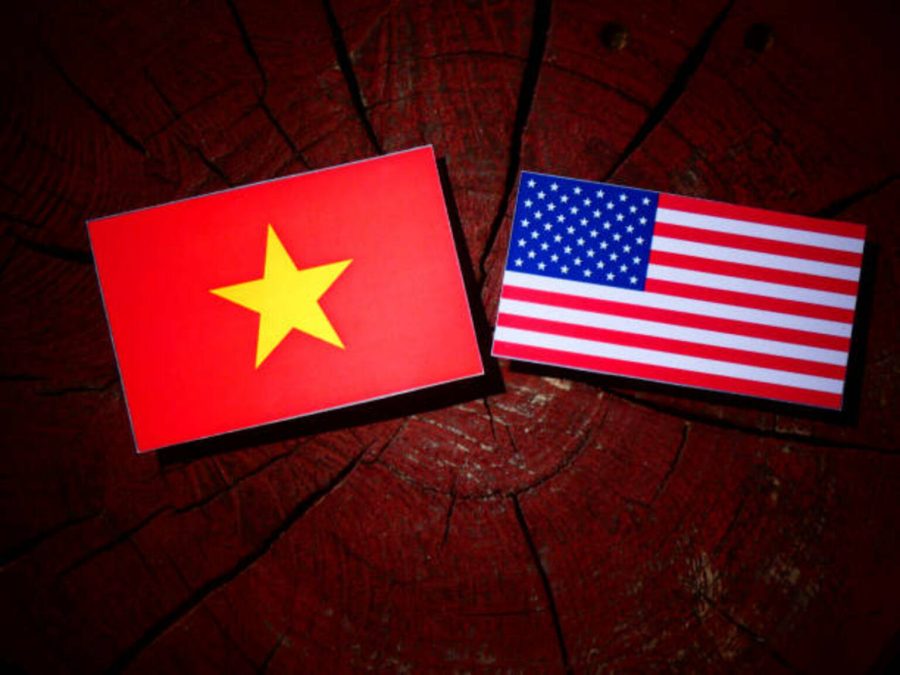
Earlier in the day, President Trump announced a deal between the U.S. and Vietnam which includes a 20% tariff on imported goods from the Southeast Asian nation, and a 40% tariff on transshipments, a practice China employs to sidestep U.S. trade policies.
While the 20% tariff initially spooked retailers like Nike (NYSE:NKE), Abercrombie & Fitch (NYSE:ANF), Gap (NYSE:GAP), Levi Strauss (NYSE:LEVI), and V.F. Corp (NYSE:VFC), all of whom rely heavily on manufacturing in Southeast Asia, shares recovered as the deal eliminates the possibility for a 46% tax on imported merchandise and the 25% country-specific reciprocal tariffs set to take effect July 9.
The deal also gives the U.S. tariff-free access to Vietnam’s markets, a measure that addresses Vietnam’s $120B trade surplus with the U.S.
After “Liberation Day” on April 2, shares of those retailers with a heavy manufacturing presence in Southeast Asia reflected the implication of import tariffs ranging from 84% on China to more than 40% on Sri Lanka, Vietnam, Laos, and Cambodia. While softening some of the harsher tariff proposals during ongoing trade talks, Trump set a July 9 deadline for reaching a deal before a 25% tariff would be imposed on all U.S. imports.
Now that the trade deal is finalized—adding 20% to manufacturing costs—retailers must decide whether to raise prices or absorb the increased expenses in lieu of other cost-saving measures.
Related tickers: RH (RH), Williams-Sonoma (WSM), TJX Companies (TJX), Skechers (SKX), Crocs (CROX), Gildan Activewear (GIL), Columbia Sportswear (COLM), Lululemon (LULU), PVH (PVH).