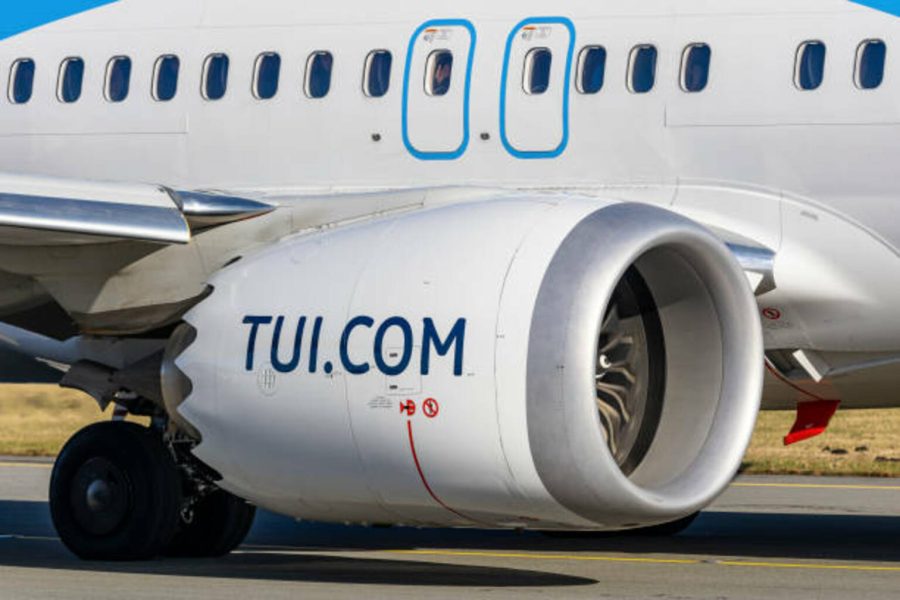
Federal safety officials are pressing for immediate steps to address a potentially serious issue involving Boeing (NYSE:BA) 737 Max aircraft, following incidents where bird strikes triggered engine failures that resulted in smoke filling the cabin and cockpit.
The National Transportation Safety Board (NTSB) issued formal recommendations after examining two 2023 events involving Southwest Airlines (NYSE:LUV) jets powered by Leap-1B engines. They are made by CFM International, a joint venture between GE Aerospace (NYSE:GE) and Safran (OTCPK:SAFRF) (OTCPK:SAFRY). In both cases, large birds struck the engines, causing internal damage that led to smoke entering the aircraft.
The NTSB has called on the Federal Aviation Administration to ensure pilots are warned about this specific hazard and its potential consequences. It also urged U.S., European and Chinese aviation regulators to assess whether similar risks exist in other aircraft models that use variants of the Leap engine, including those from Airbus (OTCPK:EADSF) (OTCPK:EADSY) and China’s Comac.
In addition to recommending a broader safety review, the NTSB asked regulators to mandate software upgrades developed by Boeing (NYSE:BA) and CFM to help mitigate the issue.
The Leap-1B is the exclusive engine used on the 737 Max, and is also a leading choice for Airbus’s (OTCPK:EADSF) (OTCPK:EADSY) A320neo aircraft.
One of the smoke-related incidents has been under NTSB investigation since November. That inquiry followed the FAA’s announcement that it would form a Corrective Action Review Board to assess recommendations from its own technical team. Among the ideas considered was a temporary adjustment to pilot takeoff procedures. However, the FAA ultimately opted against an interim fix, choosing instead to pursue a long-term solution involving a software update.
The Department of Transportation’s Office of Inspector General announced in April it would audit the FAA’s response to these incidents.
In both events, bird strikes damaged engine fan blades, triggering a component called the load reduction device, which is designed to reduce vibration. When activated, the system unintentionally allowed oil to leak into heated engine parts, leading to smoke infiltrating the aircraft interior, raising significant safety concerns.
Shares of GE Aerospace dipped 0.3% following the news, while Boeing’s stock fell about 1.3% during afternoon trading. Southwest, GE, Boeing and the FAA have not yet issued statements.